
VETUS vs Max Power Bow Thrusters
On current catalogues, VETUS leads on proportional control for plain 12 V boats, where Max Power's ECO proportional range is 24 and 48 V only, and on links with the engine joystick systems VETUS lists, where Max Power publishes none. Max Power's 12/24 V proportional retrofit kit for its tunnel thrusters (72632) is not in its 2025 catalogue, though its Australian distributor still lists it.
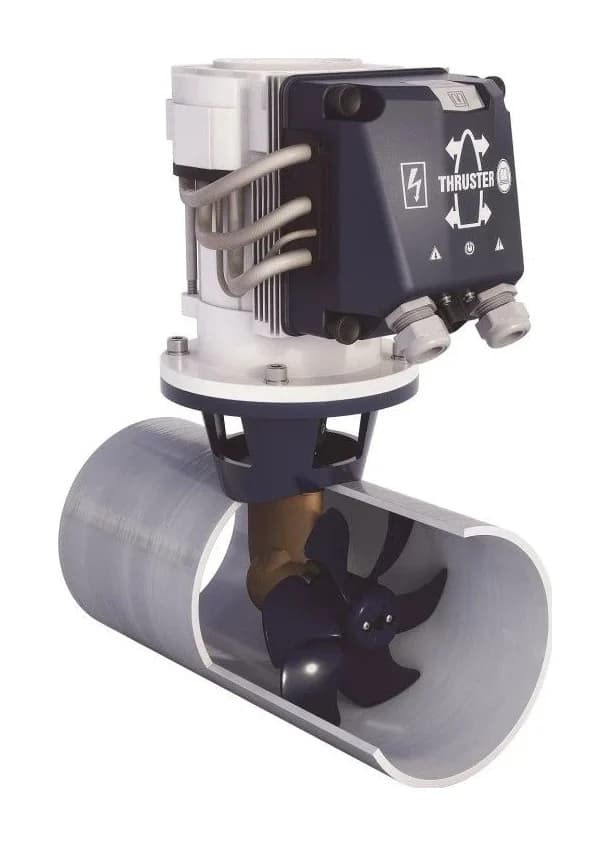
Where VETUS has the edge over Max Power
Proportional on plain 12 V
Proportional means the thrust follows how far you move the control, not just on or off. The 12 V BOW PRO (BOWA) models do it straight off 12 V, from 30 kgf (kilograms of force) in a 110 mm tunnel to 76 kgf in 185 mm. BOW PRO Boosted models, 57 to 150 kgf, run their own two-battery 24 V bank, topped up from 12 V by a built-in charger; as standard, that charger is only suitable for lead-acid batteries. Max Power's 2025 catalogue lists its ECO proportional models at 24 V and 48 V only. Max Power's 12/24 V proportional retrofit kit for its tunnel thrusters (72632) is not in that catalogue, though its Australian distributor still lists it.
Proportional in smaller tunnels
BOW PRO is made for 110, 125, 140 and 150 mm tunnels as well as 185, 250, 300 and 400 mm. Max Power's 2025 catalogue lists its ECO proportional tunnel models in 185 and 250 mm tunnels only, with none for the 110 and 125 mm tunnels of its CT25, CT35 and CT45. Max Power's 12/24 V proportional retrofit kit for its tunnel thrusters (72632), which its 2019 brochure says retrofits to all Max Power models, is not in that catalogue, though its Australian distributor still lists it.
Works with engine joysticks
BOW PRO links with Yamaha Helm Master EX (Yamaha's upgraded controls; Yamaha says new boats only, fitted by the boat builder); Mercury Joystick Piloting for Outboards (JPO) on Verado, with Mercury's integration kit; Honda outboards with Ultraflex controls; Suzuki's DF300BMD and DF350AMD; and Yanmar JC20A and JC30 inboard joysticks (twin shaft-drive installations). VETUS says some need its CANverter gateway and others parts from the engine or control maker, and not every joystick system from these makers is covered, so we confirm yours before we quote. Max Power publishes compatibility with its own panels and joysticks only.
Wider ignition-protected tunnel range
VETUS's on/off ignition-protected DC tunnel thrusters run from 25 to 160 kgf at 12 or 24 V, against 35 to 122 kgf for Max Power's ignition-protected tunnel models (VETUS rates this thrust at a battery voltage of 10.5 or 21 V, Max Power at normal voltage). VETUS says a thruster in a compartment with a petrol engine, tank or fuel line, or propane storage must be ignition protected, and lists outboard engines and their fuel tanks, and PWCs, among the spaces its ignition-protected thrusters are made for. BOW PRO is not ignition protected. For the stern, Max Power also offers its Stern Pod, whose housing it describes as ignition protected to ISO 8846.
Our verdict
On the two makers' current catalogues, VETUS has the edge for proportional control on a plain 12 V boat or in a tunnel under 185 mm, and for BOW PRO links with the engine joystick systems VETUS lists, where Max Power publishes none. The 12 V BOW PRO (BOWA) models run proportionally straight off 12 V in 110 to 185 mm tunnels, where Max Power's 2025 catalogue lists its ECO proportional tunnel models at 24 V and 48 V only, in 185 and 250 mm tunnels. Max Power's 12/24 V proportional retrofit kit for its tunnel thrusters (72632) is not in that catalogue, though its Australian distributor still lists it. Max Power has real strengths too: it is the better fit for a retractable from a current catalogue range, a Stern Pod fitted from outside the transom, a thruster it says is designed for lithium banks, or very large hydraulic thrust.
VETUS and Max Power side by side
Published figures from each maker, labelled where they come from an Australian distributor or another company. Where a maker does not publish a figure, the table says so rather than guessing, and a tick marks whichever side has the published edge - including when that is Max Power.
Maker
VETUS
VETUS B.V., Schiedam, the Netherlands. VETUS's Australian company is VETUS-Maxwell Pty Ltd, Capalaba, Queensland
Max Power
Lalizas Italia s.r.l., Cambiago, Italy. Max Power says it was founded in 1987 in Mandelieu, France, and moved production to Monza, Italy at the end of 2011
Proportional range
VETUS
BOW PRO, proportional as standard: more than 20 models from 30 to 420 kgf at 12, 24 or 48 V, in tunnels from 110 to 400 mm. The RIMDRIVE RD160 (160 kgf, 48 V) is proportional too
Max Power
ECO PROportional: five tunnel models from 90 to 250 kg at 24 V (the ECO-PRO 130 is 48 V), in 185 and 250 mm tunnels. VIP ECO proportional retractables run from 110 to 250 kg at 24 or 48 V. The CT 550 AC (450 kgf, 400 mm tunnel, three-phase AC) has proportional control through an inverter
Thrust as each maker lists it. kgf (kilograms of force) is the push the thruster makes; Max Power's ECO table writes it as kg, one figure per model, with no test voltage stated. VETUS lists BOW PRO thrust at 12, 24 or 48 V. The tick is for breadth on battery power: VETUS's catalogue lists more proportional models, in more tunnel sizes, than Max Power's 2025 catalogue; Max Power's CT 550 AC reaches higher thrust on a three-phase AC supply.
Proportional on a 12 V boat
VETUS
The 12 V BOW PRO (BOWA) models run proportionally straight off a 12 V supply, from 30 to 76 kgf. BOW PRO Boosted models from 57 to 150 kgf run their own 24 V thruster bank and charge it from the boat's 12 V supply through a built-in DC-to-DC charger
Max Power
Max Power's 2025 catalogue lists no 12 V ECO model, and its upgrade guide says an ECO on a boat with a different charging voltage may need charging and supply changes, such as a battery coupler or charger. Max Power's website still hosts 2019-2020 documents for a 12/24 V Proportional Electronic System retrofit kit (72632) for its tunnel thrusters, which its brochure says retrofits to all Max Power models. The kit is not in the 2025 catalogue, though Max Power's Australian distributor, Southern Seas Marine, still lists it
The tick reflects the two makers' current catalogues. VETUS specifies two batteries for the 24 V bank on BOW PRO Boosted models up to 150 kgf. As standard, the built-in charger is only suitable for lead-acid batteries, and VETUS says it only switches on once the charging source reaches a suitable voltage, to avoid draining the start battery.
Motor technology
VETUS
BOW PRO: brushless motor with no carbon brushes (VETUS's spec tables list a brushless AC motor). DC and ignition-protected ranges: series-wound DC motors with carbon brushes
Max Power
ECO: 'hairpin' brushless AC motor, driven by a DC-to-AC controller mounted on the motor. CT on/off: brushed DC motors; the winding type is not published
Brushless motors have no carbon brushes to wear: VETUS says to check the brushes on its DC motors yearly, and Max Power's CT manual tells owners to clean dust out of the motor brushes with compressed air.
Full-power runtime, proportional
VETUS
BOW PRO: 6 or 10 minutes at full power, depending on model. After that the power may be reduced; VETUS says runtime is greatly extended below full power, and that its motor controller has built-in over-temperature and low-battery protection
Max Power
ECO: Max Power advertises 'unlimited runtime' until the battery runs out. Its manual says output drops to 80% when the thruster gets hot and the thruster stops at a critical temperature. Max Power publishes no full-power minutes for its ECO tunnel models
Proportional against proportional here. On/off runtimes are in the next row.
On/off range
VETUS
DC range: 25 to 285 kgf at 12, 24 or 48 V, in 110 to 300 mm tunnels. VETUS's catalogue gives a run time of 2 to 4 minutes in any one hour, whether run continuously or added up over shorter bursts. VETUS's BPSR, BPJR, BPAS and BPAJ DC panels switch the thruster off after more than 2 minutes' continuous running, with a warning, and it can be restarted once the switch is released and the panel's light stops flashing, about 5 seconds later
Max Power
CT range: 30 to 325 kgf at 12, 24 or 48 V, in 110 to 315 mm tunnels. Rated S2-3 min (short-time duty), with a maximum running time of 2 to 3 minutes depending on ambient temperature; the CT 165/225 manual rates S2-2.5 min. Max Power's CT manuals say the motor has a thermal switch as standard: once the overheat alarm sounds, the thruster gives 10 more seconds of use, then shuts down until it cools
Thrust bases differ. VETUS's catalogue says its DC thrusters are rated at a battery voltage of 10.5 or 21 V, allowing for voltage drop; its 285 kgf model is listed at 48 V. Max Power's CT tables list thrust at 'normal voltage' and at a 10% voltage drop; the normal-voltage figure is quoted here.
Engine joystick integration
VETUS
BOW PRO integrates with Yamaha Helm Master EX (Yamaha's upgraded controls; Yamaha says new boats only, fitted by the boat builder); Mercury Joystick Piloting for Outboards (JPO) on Verado, with Mercury's integration kit; Honda outboards with Ultraflex controls; Suzuki DF300BMD and DF350AMD; Yanmar JC20A and JC30 inboard joysticks (twin shaft-drive installations); and, on vetus.com, Cummins inboards with Glendinning joystick control. CANverter gateways link V-CAN to NMEA 2000 and J1939
Max Power
Max Power publishes compatibility with its own panels and joysticks only, and lists no engine or third-party joystick integration
Each VETUS integration works differently: some need a VETUS CANverter, others need parts from the engine or control maker. BOW PRO integrates with Yamaha Helm Master EX, and VETUS says it needs Yamaha's upgraded Helm Master EX controls. Yamaha says its integrated variable-speed bow thruster control is only available through boat-builder installation on new boats (Yamaha rigging bulletin, January 2024, repeated in Yamaha's February 2026 update). If your boat already has Helm Master EX, we can't promise that a BOW PRO fitted now will work through the Yamaha joystick. It would run from its own VETUS panel or joystick, and we check with Yamaha before you commit. For Mercury JPO, VETUS says the integration covers all BOW PRO models on single or multi-engine Verado boats, using a bow thruster integration kit from Mercury, and VETUS's Mercury flyer adds that Mercury's next-generation Digital Throttle & Shift controls are required. Mercury's current joystick pages name no thruster brands, so we confirm your engines and controls with a Mercury dealer before you commit. For Yanmar, VETUS names the JC20A and the newer JC30, which Yanmar describes as joystick systems for twin Yanmar shaft-drive engines, and VETUS's wiring manual makes the link through a VETUS CANverter (J1939). VETUS's catalogue and Yanmar's Australian distributor also mention single-engine installations, so we confirm your engines and joystick before you commit.
Controls
VETUS
V-CAN proportional panels (IP65) with twin connectors for extra helm stations; the BPPJA and DBPPJA add lock-and-hold at any thrust level. The DBPPJA double panel runs bow and stern thrusters individually or together, and in opposite directions to rotate the boat
Max Power
ECO: CAN-bus proportional joystick (IP67) with a hold function; up to three joysticks per thruster, one active at a time. CT: control panels that can run in parallel through a Y connector, and a Control Panel Boat (318234) for combined bow and stern use. A radio remote is offered for Max Power tunnel and retractable thrusters
Warranty
VETUS
3 years for a private owner's strictly recreational use (not a company), thrusters included. 12 months for professional use, with written approval from VETUS or its dealer beforehand. Wear parts such as brushes and anodes excluded; no registration step
Max Power
Website Warranty Conditions: 3 years from the end user's purchase date, transferable, limited to 6 months for anything other than pleasure craft. Most current manuals: 2 years, plus a third year if registered within 3 months. The ECO manuals limit non-pleasure use to 1 year, and several 2026 manuals also state 'Warranty starts 6 months after the boat is delivered to the dealer', alongside a 2-year period counted from the end user's purchase
VETUS's claims go through the supplier you bought from. VETUS voids a claim where required maintenance wasn't done by an authorised VETUS dealer or the installation was faulty, and excludes consequential costs such as transport, labour and lifting. The remaining warranty transfers to a new owner. Max Power's website and manuals set out different terms, so both are shown. Max Power's website covers all parts and up to two hours of labour for field repairs in year 1; for years 2 and 3 it lists factory testing, diagnosis, repairs and replacements and does not mention field labour, and it excludes the cost of hauling the boat, travel costs and repairs by an unauthorised service centre. Max Power's CT manuals define pleasure craft as a vessel for the owner's personal use with no commercial use, such as charter or work boats. If the boat is company-owned or works commercially, confirm cover in writing with the maker or its dealer before relying on it.
Support in Victoria
VETUS
Luxfords Marine is the authorised Victorian VETUS distributor. Under VETUS's warranty policy, claims go through the supplier you bought from
Max Power
Southern Seas Marine (Coomera, Queensland) is the Australian distributor and service station on Max Power's global network, and it lists an authorised Max Power sales and service agent in Victoria. Max Power's manuals say claims go through your dealer or installer, or the nearest Max Power distributor
Tunnel sizes
VETUS
110, 125, 140, 150, 185, 250, 300 and 400 mm
Max Power
110, 125, 185, 250, 300, 315 and 400 mm; the CT 1000 HYD uses a 500 mm tunnel
Sizes in common: 110, 125, 185, 250, 300 and 400 mm. VETUS says BOW PRO was made to share tunnel sizes with current VETUS thrusters as well as many other brands; it does not name them.
Ignition-protected tunnel thrusters
VETUS
Ignition-protected DC range, 25 to 160 kgf at 12 or 24 V. VETUS says the housing enables ISO 8846 compliance, and its EU Declaration of Conformity for the BOW55, BOW75 and BOW95 DI series cites ISO 8846. BOW PRO is not ignition protected
Max Power
Max Power's catalogue says its ignition-protected range covers models CT35 to CT125 and is certified to ISO 8846, and tables four models (CT35-IP, CT45-IP, CT100-IP and CT125-IP), 35 to 122 kgf at 12 or 24 V. It also describes the Stern Pod housing as ignition protected to ISO 8846
VETUS says a thruster in a compartment with a petrol engine, tank or fuel line, or propane storage must be ignition protected, and lists outboard engines and their fuel tanks, and PWCs, among the spaces its ignition-protected thrusters are made for. Among tunnel thrusters, VETUS publishes the wider ignition-protected thrust range: 25 to 160 kgf against 35 to 122 kgf. VETUS rates this thrust at a battery voltage of 10.5 or 21 V, allowing for voltage drop; Max Power's table gives maximum thrust at normal voltage. Max Power's Stern Pod, in the next row, adds ignition-protected stern units up to the CT225 size.
Stern thruster fitted outside
VETUS
Transom-mounted stern tunnels from 110 to 300 mm, plus one for the RIMDRIVE. The tunnel and propeller sit outside the transom; the motor and electrics are fitted inside
Max Power
Stern Pod: Max Power says it installs entirely from outside the transom, greatly reducing the need for inside access and allowing greater immersion depth, and that its housing is ignition protected to ISO 8846. Its January 2010 Stern Pod manual says the controller and battery isolator should be installed outside the zone where flammable gases can be
Retractable thrusters
VETUS
Retractable BOW PRO coming soon: VETUS's 2026-2027 catalogue lists four models from 57 to 90 kgf as coming soon, and lists no other retractable
Max Power
Available now: Compact Retract (70 to 100 kgf, 12, 24 or 48 V), VIP 150 and VIP 250 Electric, VIP ECO proportional models (110 to 250 kg, 24 or 48 V), VIP HYD, and the folding hydraulic R range (R200 to R600)
Hydraulic thrusters
VETUS
Seven models from 55 to 550 kgf, driven by the propulsion engine or a generator, with on/off, two-stage or proportional control
Max Power
Tunnel models from the CT 125 HYD to the CT 1000 HYD, rated 1000 kgf heavy duty (1200 kgf light duty) in a 500 mm tunnel, plus VIP HYD and folding R-range hydraulic retractables
Max Power's catalogue and product pages give different ratings for some mid-size hydraulic tunnel models, so only its flagship figures are quoted.
Lithium batteries
VETUS
As standard, the BOW PRO Boosted built-in charger is only suitable for lead-acid batteries, and VETUS publishes no lithium settings for it
Max Power
Max Power says its ECO series is designed for Li-ion and LiFePO4 banks and also runs on lead batteries, including AGM and gel; on lithium, it says the supply must stay within 21.0 to 28.8 V (24 V models) or 42.0 to 57.6 V (48 V models). It says its standard on/off models are designed for lead batteries, including AGM and gel
| Specification | VETUS | Max Power |
|---|---|---|
| Maker | VETUS B.V., Schiedam, the Netherlands. VETUS's Australian company is VETUS-Maxwell Pty Ltd, Capalaba, Queensland | Lalizas Italia s.r.l., Cambiago, Italy. Max Power says it was founded in 1987 in Mandelieu, France, and moved production to Monza, Italy at the end of 2011 |
| Proportional range | BOW PRO, proportional as standard: more than 20 models from 30 to 420 kgf at 12, 24 or 48 V, in tunnels from 110 to 400 mm. The RIMDRIVE RD160 (160 kgf, 48 V) is proportional too | ECO PROportional: five tunnel models from 90 to 250 kg at 24 V (the ECO-PRO 130 is 48 V), in 185 and 250 mm tunnels. VIP ECO proportional retractables run from 110 to 250 kg at 24 or 48 V. The CT 550 AC (450 kgf, 400 mm tunnel, three-phase AC) has proportional control through an inverter |
| Thrust as each maker lists it. kgf (kilograms of force) is the push the thruster makes; Max Power's ECO table writes it as kg, one figure per model, with no test voltage stated. VETUS lists BOW PRO thrust at 12, 24 or 48 V. The tick is for breadth on battery power: VETUS's catalogue lists more proportional models, in more tunnel sizes, than Max Power's 2025 catalogue; Max Power's CT 550 AC reaches higher thrust on a three-phase AC supply. | ||
| Proportional on a 12 V boat | The 12 V BOW PRO (BOWA) models run proportionally straight off a 12 V supply, from 30 to 76 kgf. BOW PRO Boosted models from 57 to 150 kgf run their own 24 V thruster bank and charge it from the boat's 12 V supply through a built-in DC-to-DC charger | Max Power's 2025 catalogue lists no 12 V ECO model, and its upgrade guide says an ECO on a boat with a different charging voltage may need charging and supply changes, such as a battery coupler or charger. Max Power's website still hosts 2019-2020 documents for a 12/24 V Proportional Electronic System retrofit kit (72632) for its tunnel thrusters, which its brochure says retrofits to all Max Power models. The kit is not in the 2025 catalogue, though Max Power's Australian distributor, Southern Seas Marine, still lists it |
| The tick reflects the two makers' current catalogues. VETUS specifies two batteries for the 24 V bank on BOW PRO Boosted models up to 150 kgf. As standard, the built-in charger is only suitable for lead-acid batteries, and VETUS says it only switches on once the charging source reaches a suitable voltage, to avoid draining the start battery. | ||
| Motor technology | BOW PRO: brushless motor with no carbon brushes (VETUS's spec tables list a brushless AC motor). DC and ignition-protected ranges: series-wound DC motors with carbon brushes | ECO: 'hairpin' brushless AC motor, driven by a DC-to-AC controller mounted on the motor. CT on/off: brushed DC motors; the winding type is not published |
| Brushless motors have no carbon brushes to wear: VETUS says to check the brushes on its DC motors yearly, and Max Power's CT manual tells owners to clean dust out of the motor brushes with compressed air. | ||
| Full-power runtime, proportional | BOW PRO: 6 or 10 minutes at full power, depending on model. After that the power may be reduced; VETUS says runtime is greatly extended below full power, and that its motor controller has built-in over-temperature and low-battery protection | ECO: Max Power advertises 'unlimited runtime' until the battery runs out. Its manual says output drops to 80% when the thruster gets hot and the thruster stops at a critical temperature. Max Power publishes no full-power minutes for its ECO tunnel models |
| Proportional against proportional here. On/off runtimes are in the next row. | ||
| On/off range | DC range: 25 to 285 kgf at 12, 24 or 48 V, in 110 to 300 mm tunnels. VETUS's catalogue gives a run time of 2 to 4 minutes in any one hour, whether run continuously or added up over shorter bursts. VETUS's BPSR, BPJR, BPAS and BPAJ DC panels switch the thruster off after more than 2 minutes' continuous running, with a warning, and it can be restarted once the switch is released and the panel's light stops flashing, about 5 seconds later | CT range: 30 to 325 kgf at 12, 24 or 48 V, in 110 to 315 mm tunnels. Rated S2-3 min (short-time duty), with a maximum running time of 2 to 3 minutes depending on ambient temperature; the CT 165/225 manual rates S2-2.5 min. Max Power's CT manuals say the motor has a thermal switch as standard: once the overheat alarm sounds, the thruster gives 10 more seconds of use, then shuts down until it cools |
| Thrust bases differ. VETUS's catalogue says its DC thrusters are rated at a battery voltage of 10.5 or 21 V, allowing for voltage drop; its 285 kgf model is listed at 48 V. Max Power's CT tables list thrust at 'normal voltage' and at a 10% voltage drop; the normal-voltage figure is quoted here. | ||
| Engine joystick integration | BOW PRO integrates with Yamaha Helm Master EX (Yamaha's upgraded controls; Yamaha says new boats only, fitted by the boat builder); Mercury Joystick Piloting for Outboards (JPO) on Verado, with Mercury's integration kit; Honda outboards with Ultraflex controls; Suzuki DF300BMD and DF350AMD; Yanmar JC20A and JC30 inboard joysticks (twin shaft-drive installations); and, on vetus.com, Cummins inboards with Glendinning joystick control. CANverter gateways link V-CAN to NMEA 2000 and J1939 | Max Power publishes compatibility with its own panels and joysticks only, and lists no engine or third-party joystick integration |
| Each VETUS integration works differently: some need a VETUS CANverter, others need parts from the engine or control maker. BOW PRO integrates with Yamaha Helm Master EX, and VETUS says it needs Yamaha's upgraded Helm Master EX controls. Yamaha says its integrated variable-speed bow thruster control is only available through boat-builder installation on new boats (Yamaha rigging bulletin, January 2024, repeated in Yamaha's February 2026 update). If your boat already has Helm Master EX, we can't promise that a BOW PRO fitted now will work through the Yamaha joystick. It would run from its own VETUS panel or joystick, and we check with Yamaha before you commit. For Mercury JPO, VETUS says the integration covers all BOW PRO models on single or multi-engine Verado boats, using a bow thruster integration kit from Mercury, and VETUS's Mercury flyer adds that Mercury's next-generation Digital Throttle & Shift controls are required. Mercury's current joystick pages name no thruster brands, so we confirm your engines and controls with a Mercury dealer before you commit. For Yanmar, VETUS names the JC20A and the newer JC30, which Yanmar describes as joystick systems for twin Yanmar shaft-drive engines, and VETUS's wiring manual makes the link through a VETUS CANverter (J1939). VETUS's catalogue and Yanmar's Australian distributor also mention single-engine installations, so we confirm your engines and joystick before you commit. | ||
| Controls | V-CAN proportional panels (IP65) with twin connectors for extra helm stations; the BPPJA and DBPPJA add lock-and-hold at any thrust level. The DBPPJA double panel runs bow and stern thrusters individually or together, and in opposite directions to rotate the boat | ECO: CAN-bus proportional joystick (IP67) with a hold function; up to three joysticks per thruster, one active at a time. CT: control panels that can run in parallel through a Y connector, and a Control Panel Boat (318234) for combined bow and stern use. A radio remote is offered for Max Power tunnel and retractable thrusters |
| Warranty | 3 years for a private owner's strictly recreational use (not a company), thrusters included. 12 months for professional use, with written approval from VETUS or its dealer beforehand. Wear parts such as brushes and anodes excluded; no registration step | Website Warranty Conditions: 3 years from the end user's purchase date, transferable, limited to 6 months for anything other than pleasure craft. Most current manuals: 2 years, plus a third year if registered within 3 months. The ECO manuals limit non-pleasure use to 1 year, and several 2026 manuals also state 'Warranty starts 6 months after the boat is delivered to the dealer', alongside a 2-year period counted from the end user's purchase |
| VETUS's claims go through the supplier you bought from. VETUS voids a claim where required maintenance wasn't done by an authorised VETUS dealer or the installation was faulty, and excludes consequential costs such as transport, labour and lifting. The remaining warranty transfers to a new owner. Max Power's website and manuals set out different terms, so both are shown. Max Power's website covers all parts and up to two hours of labour for field repairs in year 1; for years 2 and 3 it lists factory testing, diagnosis, repairs and replacements and does not mention field labour, and it excludes the cost of hauling the boat, travel costs and repairs by an unauthorised service centre. Max Power's CT manuals define pleasure craft as a vessel for the owner's personal use with no commercial use, such as charter or work boats. If the boat is company-owned or works commercially, confirm cover in writing with the maker or its dealer before relying on it. | ||
| Support in Victoria | Luxfords Marine is the authorised Victorian VETUS distributor. Under VETUS's warranty policy, claims go through the supplier you bought from | Southern Seas Marine (Coomera, Queensland) is the Australian distributor and service station on Max Power's global network, and it lists an authorised Max Power sales and service agent in Victoria. Max Power's manuals say claims go through your dealer or installer, or the nearest Max Power distributor |
| Tunnel sizes | 110, 125, 140, 150, 185, 250, 300 and 400 mm | 110, 125, 185, 250, 300, 315 and 400 mm; the CT 1000 HYD uses a 500 mm tunnel |
| Sizes in common: 110, 125, 185, 250, 300 and 400 mm. VETUS says BOW PRO was made to share tunnel sizes with current VETUS thrusters as well as many other brands; it does not name them. | ||
| Ignition-protected tunnel thrusters | Ignition-protected DC range, 25 to 160 kgf at 12 or 24 V. VETUS says the housing enables ISO 8846 compliance, and its EU Declaration of Conformity for the BOW55, BOW75 and BOW95 DI series cites ISO 8846. BOW PRO is not ignition protected | Max Power's catalogue says its ignition-protected range covers models CT35 to CT125 and is certified to ISO 8846, and tables four models (CT35-IP, CT45-IP, CT100-IP and CT125-IP), 35 to 122 kgf at 12 or 24 V. It also describes the Stern Pod housing as ignition protected to ISO 8846 |
| VETUS says a thruster in a compartment with a petrol engine, tank or fuel line, or propane storage must be ignition protected, and lists outboard engines and their fuel tanks, and PWCs, among the spaces its ignition-protected thrusters are made for. Among tunnel thrusters, VETUS publishes the wider ignition-protected thrust range: 25 to 160 kgf against 35 to 122 kgf. VETUS rates this thrust at a battery voltage of 10.5 or 21 V, allowing for voltage drop; Max Power's table gives maximum thrust at normal voltage. Max Power's Stern Pod, in the next row, adds ignition-protected stern units up to the CT225 size. | ||
| Stern thruster fitted outside | Transom-mounted stern tunnels from 110 to 300 mm, plus one for the RIMDRIVE. The tunnel and propeller sit outside the transom; the motor and electrics are fitted inside | Stern Pod: Max Power says it installs entirely from outside the transom, greatly reducing the need for inside access and allowing greater immersion depth, and that its housing is ignition protected to ISO 8846. Its January 2010 Stern Pod manual says the controller and battery isolator should be installed outside the zone where flammable gases can be |
| Retractable thrusters | Retractable BOW PRO coming soon: VETUS's 2026-2027 catalogue lists four models from 57 to 90 kgf as coming soon, and lists no other retractable | Available now: Compact Retract (70 to 100 kgf, 12, 24 or 48 V), VIP 150 and VIP 250 Electric, VIP ECO proportional models (110 to 250 kg, 24 or 48 V), VIP HYD, and the folding hydraulic R range (R200 to R600) |
| Hydraulic thrusters | Seven models from 55 to 550 kgf, driven by the propulsion engine or a generator, with on/off, two-stage or proportional control | Tunnel models from the CT 125 HYD to the CT 1000 HYD, rated 1000 kgf heavy duty (1200 kgf light duty) in a 500 mm tunnel, plus VIP HYD and folding R-range hydraulic retractables |
| Max Power's catalogue and product pages give different ratings for some mid-size hydraulic tunnel models, so only its flagship figures are quoted. | ||
| Lithium batteries | As standard, the BOW PRO Boosted built-in charger is only suitable for lead-acid batteries, and VETUS publishes no lithium settings for it | Max Power says its ECO series is designed for Li-ion and LiFePO4 banks and also runs on lead batteries, including AGM and gel; on lithium, it says the supply must stay within 21.0 to 28.8 V (24 V models) or 42.0 to 57.6 V (48 V models). It says its standard on/off models are designed for lead batteries, including AGM and gel |
Max Power figures come from its 2025 catalogue, website pages and installation manuals, including a Stern Pod manual dated January 2010, and from its Australian distributor's pages; VETUS figures from the 2026-2027 catalogue, vetus.com and VETUS's manuals; engine joystick limits from Yamaha's, Mercury's and Yanmar's own pages and Yanmar's Australian distributor, as labelled; all checked September 2026. Where a maker publishes no figure the table says so. Where Max Power's documents disagree both versions are shown; where VETUS's disagree, the more conservative VETUS figure is used. Whatever a manufacturer's warranty says, Australian Consumer Law guarantees also apply and can't be excluded - and for goods under $100,000 they cover business buyers too.
Replacing a Max Power thruster
- Most Max Power tunnel diameters are sizes VETUS also makes: 110, 125, 185, 250, 300 and 400 mm. VETUS says BOW PRO was made to share tunnel sizes with current VETUS thrusters as well as many other brands, though it does not name them, and vetus.com says it fits existing tunnels with minimal modifications. A CT 325 sits in a 315 mm tunnel, a size VETUS doesn't list, so that swap needs a closer look.
- Check for ignition protection first. VETUS says a thruster in a compartment with a petrol engine, tank or fuel line, or propane storage must be ignition protected, and lists outboard engines and their fuel tanks, and PWCs, among the spaces its ignition-protected thrusters are made for. If your Max Power is an ignition-protected model, such as the 12 V CT35-IP, CT45-IP or CT100-IP, or sits in one of those spaces, the replacement should be ignition protected too. That means VETUS's ignition-protected DC range (25 to 160 kgf, 12 or 24 V, on/off); BOW PRO is not ignition protected.
- Match the thrust, not just the tunnel. In a 185 mm tunnel the largest BOW PRO on plain 12 V is the 76 kgf BOWA0761, where Max Power rates a 12 V CT80 at 80 kgf and a CT100 at 105 kgf at normal voltage (75 and 96 kgf at a 10% voltage drop). For more thrust in a 185 mm tunnel, VETUS offers BOW PRO Boosted up to 130 kgf with its own 24 V bank, or on/off DC thrusters up to 95 kgf on 12 V, which VETUS rates at a battery voltage of 10.5 V, allowing for voltage drop. In a 125 mm tunnel BOW PRO goes to 42 kgf and VETUS DC to 45 kgf, against the CT45's 45 kgf at normal voltage (40 kgf at a 10% voltage drop).
- Measure the tunnel's inside diameter, wall thickness and length, and the free space inboard where the motor will sit. Photos of the existing unit and its model plate help too.
- Tell us the battery bank, its voltage and its chemistry. A 12 V BOW PRO runs from a 12 V bank of the capacity VETUS lists for the model; a BOW PRO Boosted needs its own 24 V thruster bank (VETUS specifies two batteries up to 150 kgf), which its built-in charger tops up from 12 V. As standard, that charger is only suitable for lead-acid batteries, so a lithium bank needs discussing first.
- Plan on new controls and wiring. BOW PRO runs on VETUS's V-CAN bus from VETUS panels or a supported engine joystick system, and VETUS publishes no compatibility with Max Power panels or ECO joysticks. For Yamaha Helm Master EX (Yamaha's upgraded controls; Yamaha says new boats only, fitted by the boat builder), we check with Yamaha before you commit. VETUS's proportional panels fit a 75 mm round cut-out (76 mm for the double panel), so check the hole at the helm.
- We confirm the fit before we quote. Send the Max Power model and your measurements, and we'll check the VETUS match and quote the complete kit - we never assume a drop-in swap.
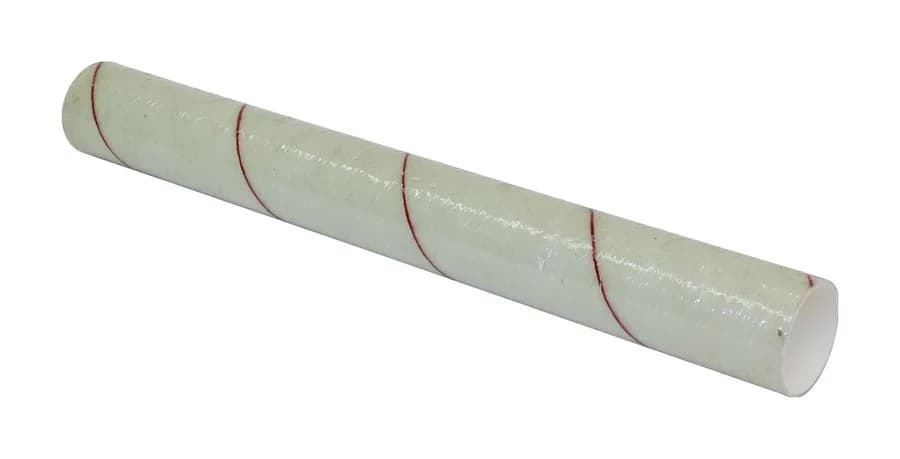
When VETUS is the right call
- You're on a 12 V boat and want proportional control. The 12 V BOW PRO (BOWA) models run proportionally straight off 12 V, and BOW PRO Boosted models up to 150 kgf charge their own 24 V bank from 12 V, where Max Power's 2025 catalogue lists its ECO proportional models at 24 V and 48 V only. Max Power's 12/24 V proportional retrofit kit for its tunnel thrusters (72632) is not in its 2025 catalogue, though its Australian distributor still lists it.
- Your boat has, or will have, a joystick-controlled engine package. Over V-CAN, VETUS publishes BOW PRO integrations with Mercury Joystick Piloting for Outboards (JPO) on Verado, with Mercury's integration kit; Honda outboards with Ultraflex controls; Suzuki DF300BMD and DF350AMD; Yanmar JC20A and JC30 inboard joysticks (twin shaft-drive installations); and, on vetus.com, Cummins inboards with Glendinning joystick control. Depending on the system, that needs a VETUS CANverter (NMEA 2000 or J1939) or parts from the engine or control maker. BOW PRO integrates with Yamaha Helm Master EX, and VETUS says it needs Yamaha's upgraded Helm Master EX controls. Yamaha says its integrated variable-speed bow thruster control is only available through boat-builder installation on new boats (Yamaha rigging bulletin, January 2024, repeated in Yamaha's February 2026 update). If your boat already has Helm Master EX, we can't promise that a BOW PRO fitted now will work through the Yamaha joystick. It would run from its own VETUS panel or joystick, and we check with Yamaha before you commit. Max Power publishes no engine joystick integration.
- You want DC proportional control outside the ECO's sizes. BOW PRO is made for 110, 125, 140 and 150 mm tunnels as well as 185, 250, 300 and 400 mm, and runs to 420 kgf on battery power, where Max Power's ECO tunnel range covers 185 and 250 mm tunnels from 90 to 250 kg (thrust as each maker lists it: VETUS at 12, 24 or 48 V, Max Power with no test voltage stated). Max Power's other proportional options in its 2025 catalogue are its VIP ECO retractables (110 to 250 kg at 24 or 48 V) and the CT 550 AC (450 kgf, 400 mm tunnel), which needs a three-phase AC supply. Max Power's 12/24 V proportional retrofit kit for its tunnel thrusters (72632) is not in its 2025 catalogue, though its Australian distributor still lists it.
- You need an ignition-protected bow thruster under 35 kgf, or above 122 kgf on a 24 V system. VETUS says a thruster in a compartment with a petrol engine, tank or fuel line, or propane storage must be ignition protected, and lists outboard engines and their fuel tanks, and PWCs, among the spaces its ignition-protected thrusters are made for. VETUS's ignition-protected DC range runs from 25 to 160 kgf at 12 or 24 V, where Max Power's ignition-protected tunnel models run from 35 to 122 kgf (VETUS rates this thrust at a battery voltage of 10.5 or 21 V, Max Power at normal voltage); for the stern, Max Power also offers its Stern Pod, whose housing it describes as ignition protected.
- You want a gearless rim-drive thruster. The RIMDRIVE RD160 (160 kgf, 48 V, 250 mm tunnel) uses the propeller as the motor's rotor, with no gears, and VETUS calls it the world's quietest thruster, though it publishes no dB figure. Max Power lists no rim-drive thruster.
When Max Power is the right call
- You want a retractable thruster now. Max Power's current catalogue lists the Compact Retract, VIP Electric, VIP ECO, VIP HYD and folding R range, while the VETUS retractable BOW PRO is still coming soon and VETUS's 2026-2027 catalogue lists no other retractable.
- You want a stern thruster that installs from outside the transom. Max Power says the Stern Pod installs entirely from the outside, greatly reducing the need for inside access, and that its housing is ignition protected to ISO 8846, though its January 2010 Stern Pod manual says the controller and battery isolator should still be installed outside any zone where flammable gases can be.
- Your thruster bank is lithium. Max Power says its ECO series is designed for Li-ion and LiFePO4 banks, and publishes the supply-voltage windows to keep to on lithium, whereas, as standard, the BOW PRO Boosted charger is only suitable for lead-acid batteries.
- You have a Max Power CT and want to go proportional in the same tunnel. Max Power says its ECO-PRO 90, 110 and 130 fit existing CT60, CT80, CT100 and CT125 tunnel installations without modifying the tunnel, and its upgrade guide also lists a 15 kW ECO motor kit for the CT165 and CT225. The command harness is replaced with a CAN one, CT60 and CT80 conversions take extra mounting and coupling parts, and because the ECO runs at 24 or 48 V, Max Power says the charging and supply circuits may need changes, such as a battery coupler or charger.
- You need very large hydraulic thrust. Max Power's hydraulic tunnel range runs to the CT 1000 HYD at 1000 kgf heavy duty in a 500 mm tunnel, beyond VETUS's largest hydraulic model at 550 kgf.
VETUS vs Max Power: common questions
Who makes Max Power thrusters?
Max Power thrusters are made by Lalizas Italia s.r.l., whose address is Cambiago, Italy. Max Power says the brand was founded in 1987 in Mandelieu, France, and that production, assembly and dispatch moved to Monza, Italy at the end of 2011. Its range covers on/off CT tunnel thrusters, ECO PROportional brushless models, ignition-protected units, the Stern Pod, electric and hydraulic retractables, and hydraulic tunnel thrusters. Southern Seas Marine in Coomera, Queensland is the Australian distributor and service station on Max Power's global network.
Is VETUS or Max Power the better bow thruster?
It depends on the boat. On the two makers' current catalogues, VETUS BOW PRO has the edge if you want proportional control on a plain 12 V system or in a tunnel smaller than 185 mm, or integration with one of these engine joystick systems: Yamaha Helm Master EX (Yamaha's upgraded controls; Yamaha says new boats only, fitted by the boat builder); Mercury Joystick Piloting for Outboards (JPO) on Verado, with Mercury's integration kit; Suzuki DF300BMD and DF350AMD outboards; Yanmar JC20A and JC30 inboard joysticks (twin shaft-drive installations); or Honda outboards on Ultraflex controls. Max Power's 12/24 V proportional retrofit kit for its tunnel thrusters (72632) is not in its 2025 catalogue, though its Australian distributor still lists it. The like-for-like Max Power is its brushless ECO PROportional range, from 90 to 250 kg at 24 or 48 V in 185 and 250 mm tunnels, against BOW PRO's 30 to 420 kgf at 12, 24 or 48 V in 110 to 400 mm tunnels, with thrust as each maker lists it. Max Power is the better fit for a retractable from a current catalogue range, a Stern Pod fitted from outside the transom, a lithium thruster bank, which Max Power says its ECO series is designed for, or very large hydraulic thrust. For plain on/off thrusters the two ranges are close: VETUS DC runs from 25 to 220 kgf on 12 or 24 V, which VETUS's catalogue rates at a battery voltage of 10.5 or 21 V, plus a 285 kgf 48 V model, and Max Power CT from 30 to 325 kgf at normal voltage.
Does Max Power make a 12 V proportional thruster?
Not in its 2025 catalogue, which lists the ECO PROportional tunnel thrusters at 24 V and 48 V only; its 12 V CT tunnel models, from 30 to 105 kgf at normal voltage, are on/off. Max Power's website still hosts 2019 and 2020 documents for a 12/24 V Proportional Electronic System kit for tunnel thrusters (72632), which its brochure says retrofits to all Max Power models. The kit is not in the 2025 catalogue, but Max Power's Australian distributor, Southern Seas Marine, still lists it, so ask them about supply and fit for your model. For an ECO on a 12 V charging line, Max Power says the charging and supply circuits may need changes, such as a battery coupler or charger; its 42545 coupler manual lists the composite tunnel range, VIP 150 Electric, VIP HYD and R200, and the coupler needs identical batteries and a charging current of 100 A or less. VETUS's 12 V BOW PRO (BOWA) models run proportionally from 30 to 76 kgf, and BOW PRO Boosted models up to 150 kgf top up their own 24 V bank from 12 V through a built-in charger. As standard, that charger is only suitable for lead-acid batteries, so tell us if your bank is lithium.
Can I replace a Max Power thruster with a VETUS?
It can be, and the tunnel is the place to start. Most Max Power tunnel diameters (110, 125, 185, 250, 300 and 400 mm) are sizes VETUS also makes, and VETUS says the BOW PRO was made to share tunnel sizes with current VETUS thrusters as well as many other brands, though it does not name them. A CT 325 sits in a 315 mm tunnel, which VETUS doesn't list. Check ignition protection too. VETUS says a thruster in a compartment with a petrol engine, tank or fuel line, or propane storage must be ignition protected, and lists outboard engines and their fuel tanks, and PWCs, among the spaces its ignition-protected thrusters are made for. If your Max Power is an ignition-protected model, or sits in one of those spaces, the replacement should be a VETUS ignition-protected DC thruster, as BOW PRO is not ignition protected. Send us the model, the tunnel's inside diameter, wall thickness and length, the space inboard and your battery set-up, and we'll confirm the fit before we quote rather than assume a drop-in swap.
What warranty comes with VETUS and Max Power thrusters?
The VETUS terms: 3 years for a private owner's strictly recreational use (not a company), thrusters included. 12 months for professional use, with written approval from VETUS or its dealer beforehand. Wear parts such as brushes and anodes excluded; no registration step. VETUS's claims go through the supplier you bought from. VETUS voids a claim where required maintenance wasn't done by an authorised VETUS dealer or the installation was faulty, and excludes consequential costs such as transport, labour and lifting. The remaining warranty transfers to a new owner. Max Power's documents set out different terms. Its website Warranty Conditions give 3 years from purchase, transferable, reduced to 6 months for anything other than pleasure craft. They cover all parts and up to two hours of field labour in year 1, list factory testing, diagnosis, repairs and replacements for years 2 and 3 without mentioning field labour, and exclude the cost of hauling the boat and travel costs. Most current Max Power manuals give 2 years plus a third year if you register within 3 months. Its CT manuals define pleasure craft as the owner's personal use with no commercial use, such as charter or work boats, and set non-pleasure use at 6 months; the ECO manuals set it at 1 year, and the ECO warranty form says cover takes effect once the form is sent with the installation or vessel invoice. If the boat is company-owned or works commercially, confirm cover in writing with the maker or its dealer before relying on it. Australian Consumer Law guarantees apply to both, whatever the warranty says.
Is there Max Power sales and service in Victoria?
Yes. Southern Seas Marine, Max Power's Australian distributor, lists an authorised Max Power sales and service agent in Victoria, so Max Power owners here have local help. If you're weighing up a VETUS thruster instead, Luxfords Marine is the authorised Victorian VETUS distributor, and we'll size the thruster and quote the complete kit from Mornington.
Weighing up VETUS and Max Power?
Tell us the boat, where you berth it and, if you're replacing a Max Power unit, its model and tunnel diameter. We'll size the VETUS thruster properly and quote the complete kit. Luxfords Marine is the authorised Victorian VETUS distributor.
Luxfords Marine is the authorised Victorian Vetus distributor — we confirm thrust sizing, specify the battery bank and cabling, and supply everything from the tunnel to the control panel.
(03) 5973 6444Get a VETUS thruster quote
A photo of the thruster motor's label, and one with a tape measure across the tunnel, lets us match the right VETUS unit. Sends to sales@luxfords.com.au.
Sources
- VETUS Catalogue 2026-2027, Thruster systems (pp. 218-245) (checked Sep 2026)
- VETUS warranty policy (checked Sep 2026)
- VETUS Maintenance and Warranty Manual for thrusters (020901.02) (checked Sep 2026)
- VETUS BOW PRO thrusters (checked Sep 2026)
- VETUS BOW PRO 185 mm installation manual (BOWB065-130) (checked Sep 2026)
- VETUS thruster integration wiring manual (021000.11, Sep 2026) (checked Sep 2026)
- VETUS BOW PRO and Yamaha Helm Master EX (checked Sep 2026)
- VETUS RIMDRIVE RD160 (VETUS webshop) (checked Sep 2026)
- VETUS conventional on/off thrusters (checked Sep 2026)
- VETUS EU Declaration of Conformity, ignition protected BOW55/75/95 DI (checked Sep 2026)
- VETUS Australia (VETUS-Maxwell Pty Ltd) (checked Sep 2026)
- Maxwell (VETUS group) Australian support network (checked Sep 2026)
- Max Power Catalogue 2025 (checked Sep 2026)
- Max Power: About (checked Sep 2026)
- Max Power FAQ (checked Sep 2026)
- Max Power Warranty Conditions (checked Sep 2026)
- Max Power CT100 and CT125 installation manual (checked Sep 2026)
- Max Power CT165 and CT225 installation manual (checked Sep 2026)
- Max Power Compact Retract installation manual (2026) (checked Sep 2026)
- Max Power ECO-Proportional series installation manual (checked Sep 2026)
- Max Power ECO-Proportional 90/110/130 installation manual (checked Sep 2026)
- Max Power: steps to upgrade from CT to ECO-Proportional (checked Sep 2026)
- Max Power ECO Joystick (checked Sep 2026)
- Max Power 12/24 V battery coupler 42545 installation manual (checked Sep 2026)
- Max Power Proportional Electronic System kit 72632 brochure (2019) (checked Sep 2026)
- Max Power Proportional Electronic System kit manual (2020) (checked Sep 2026)
- Southern Seas Marine: Max Power Proportional Electronic System for tunnel thrusters (checked Sep 2026)
- Max Power Stern Pod installation manual (dated January 2010) (checked Sep 2026)
- Max Power Global Network (checked Sep 2026)
- Southern Seas Marine: Max Power sales and service agents, Victoria (checked Sep 2026)
- VETUS dealer locator (checked Sep 2026)
- VETUS BPAJ, BPAS, BPJRC and BPSRC thruster panel user manual (020575.01 r04, Aug 2025) (checked Sep 2026)
- Yamaha Marine Rigging Systems HotSheet: 2024 Helm Master EX updates (January 2024) (checked Sep 2026)
- Yamaha Outboards (US): 2026 Yamaha product upgrades (19 February 2026) (checked Sep 2026)
- VETUS: BOW PRO and Mercury Joystick Piloting for Outboards (checked Sep 2026)
- VETUS-Mercury integration flyer (July 2023) (checked Sep 2026)
- Mercury Marine Australia: Joystick Piloting (checked Sep 2026)
- VETUS: Yanmar inboard engine integration with BOW PRO (JC30) (checked Sep 2026)
- Yanmar Marine International: JC20A joystick control (checked Sep 2026)
- Yanmar Marine International: JC30 joystick control (checked Sep 2026)
- Power Equipment (Yanmar's Australian and NZ distributor): VC30 and JC30(Z) launch (checked Sep 2026)
Max Power is a trademark of its owner and is used here only to identify the products being compared. Luxfords is not affiliated with, endorsed by or sponsored by Lalizas Italia s.r.l. Unipersonale. Other brand names mentioned, such as engine and joystick makers, are trademarks of their respective owners.