
BOW PRO vs DC thrusters: which should you choose?
Both are genuine VETUS thrusters with 40 years of engineering behind them — but they suit different owners. Here's an honest, side-by-side look at control, runtime, maintenance, battery demands and cost.
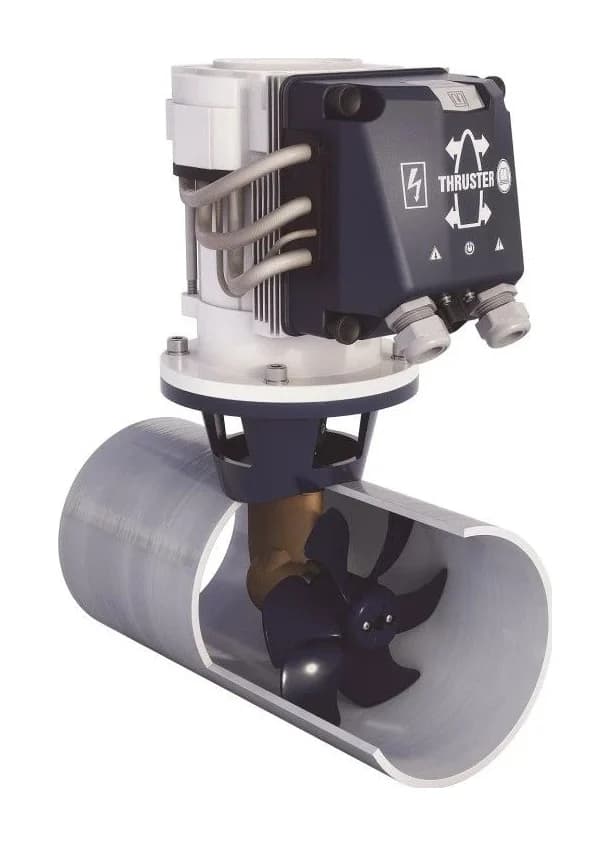
Choose BOW PRO if…
- You dock every weekend, often short-handed
- Your berth sees real wind, current or traffic
- You want joystick control with your engines (now or later)
- You'd rather never service a thruster motor
- You need longer runtimes — canals, locks, rafting
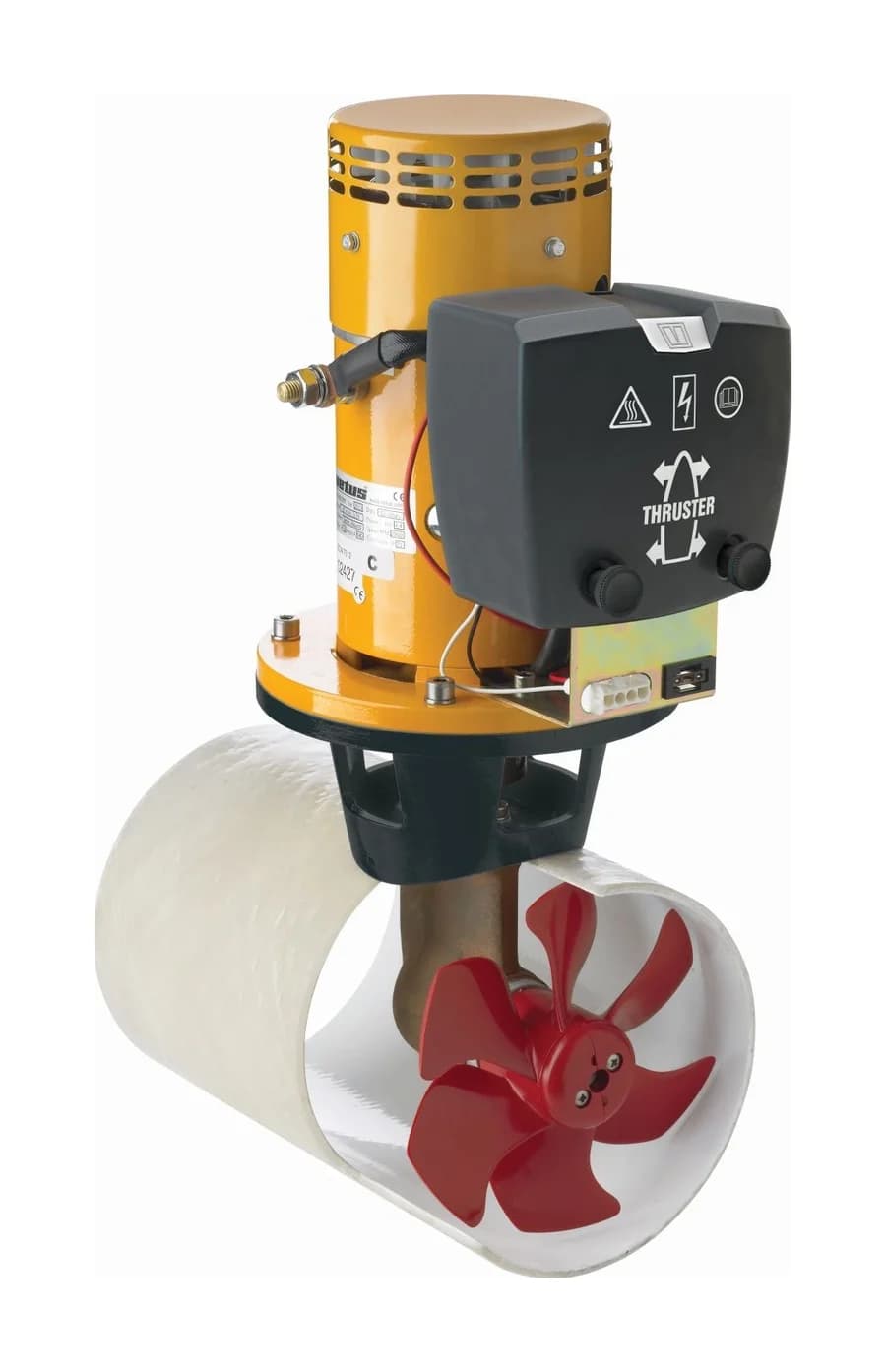
Choose a DC thruster if…
- Budget is the deciding factor
- You dock occasionally, mostly in sheltered water
- You want the simplest possible retrofit
- Short on/off bursts cover your needs
- Petrol aboard? The ignition-protected DC is your only electric option
Feature by feature
| BOW PRO | DC thruster | |
|---|---|---|
| Control | Fully proportional — dial in exactly the thrust you need | On/off, port–starboard only |
| Runtime at full power | 6–10 min continuous per hour, far longer at reduced power | 2–4 min continuous or combined per hour |
| Motor | Brushless induction — sealed, maintenance-free | Series-wound DC with carbon brushes (wear items) |
| Protection | Built-in over-temperature and low-battery electronics | Integrated thermal cut-out switch |
| Single-handed docking | Lock-and-hold panels hold thrust while you handle lines | Standard hold-the-button panels |
| Joystick integration | Yamaha, Mercury, Yanmar, Honda & Suzuki via V-CAN/CANverter | Not available |
| Battery demand | No inrush current — sized by Ah; Boosted models self-charge | Large inrush — needs high-CCA batteries |
| Purchase cost | Higher upfront | The most affordable thruster type |
| Installation | Simple, plus V-CAN wiring (BPROSET) | The simplest installation of all — easiest retrofit |
| Thrust range | 30–420 kgf (boats 20–130 ft) | 25–285 kgf (boats 15–90 ft) |
| Tunnel compatibility | Shares tunnel sizes with VETUS DC and many other brands | Standard VETUS tunnel sizes |
Specifications from the VETUS 2026–27 catalogue. Runtimes are continuous running at full power per hour; reduced power extends BOW PRO runtimes substantially.
The two differences you'll feel every trip
Control. An on/off thruster swings the bow in pulses; you time the bursts and hope the wind cooperates. Proportional control means holding 30% against a steady breeze, easing to 10% as you close the dock, then a clean 100% if a gust demands it — the difference between nudging and bouncing.
Runtime. Two to four minutes sounds like plenty until a ferry takes your spot in the lock queue. Brushed DC motors build heat fast at full load; the brushless BOW PRO runs 6–10 minutes at full power and essentially as long as your batteries allow at partial power. That margin is what lets you hold station calmly instead of rationing button presses.
Both ranges share VETUS's 40-year thruster pedigree, six-blade propellers and tunnel system — and Luxfords supports both with genuine parts. The right answer is the one that matches how you actually use your boat.
BOW PRO vs DC - FAQs
Is a BOW PRO worth the extra cost over a DC thruster?
If you dock regularly, single-hand the boat, berth in wind or current, or ever want joystick control — yes. Proportional control, 2–5× the runtime and a maintenance-free motor change how the boat handles every single trip. If you dock occasionally in sheltered water and budget rules, the DC thruster remains a proven, excellent-value choice.
Can I upgrade my existing DC thruster to a BOW PRO?
Usually, yes — BOW PRO was deliberately designed to share tunnel sizes with existing VETUS thrusters and many other brands, so an upgrade typically reuses your tunnel and avoids hull work. New V-CAN control wiring and panels are required.
Do BOW PRO and DC thrusters use the same control panels?
No. DC thrusters use conventional panels (BPSE2, BPJE2, EZDOCK2 and similar), while BOW PRO is digitally controlled over the VETUS V-CAN bus with proportional panels (BPPPA, BPPJA, DBPPJA) — including lock-and-hold versions.
What does 'proportional' actually mean when docking?
A DC thruster gives you 100% thrust or none, so you pulse the button and the bow swings in steps. A proportional thruster delivers exactly the percentage you ask for — 20% to nudge against a light breeze, 100% to fight a gust — letting you feather the boat onto the dock smoothly and hold it there.
Still weighing it up?
Tell us how you use the boat and we'll give you a straight recommendation — and a quote for both options if you'd like to compare numbers.
Luxfords Marine is the authorised Victorian Vetus distributor — we confirm thrust sizing, specify the battery bank and cabling, and supply everything from the tunnel to the control panel.
(03) 5973 6444