
Installation, tunnels & batteries
A thruster is a system, not just a motor: tunnel, thruster, battery bank, main switch, fusing, cabling and panel all have to be right. Here's what's involved — and what Luxfords specifies for you when you order.
The tunnel: the foundation of performance
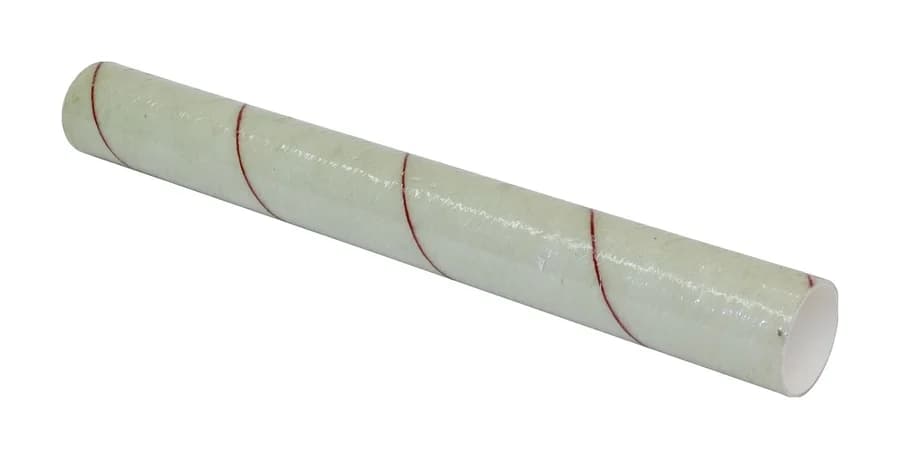
VETUS tunnels are purpose-built for VETUS thrusters in GRP, steel and aluminium, providing the strength and dimensional accuracy that make installation straightforward. Diameters run 110 / 125 / 140 / 150 / 185 / 250 / 300 / 400 mm in lengths from 750 to 3,000 mm — every thruster model maps to a specific tunnel diameter (you'll see it in each spec table on this site).
Position matters as much as diameter. The tunnel goes as far forward as practical for maximum leverage, deep enough to stay fully submerged under way and at rest. A properly submerged, correctly sized tunnel is the difference between rated thrust and a noisy froth of air — and it's why the catalogue insists the installer measures the tunnel's external diameter before cutting the hull.
For hulls that can't submerge a tunnel —shallow draft, cutaway forefoot— the retractable BOW PRO (coming soon) deploys below the hull instead.
Batteries, switches & cabling
DC thrusters: it's all about CCA
DC thrusters hit the battery with a big inrush current when initiated, so the bank is specified by cold cranking amps — each model has a minimum and maximum advised CCA. Bigger is not better: oversized banks push the thruster outside its 10.5/21/42 V operating window, causing greater wear and faster heating. VETUS SMF, AGM and deep-cycle batteries all publish their CCA rating for exact matching.
BOW PRO & RIMDRIVE: endurance in Ah
Brushless thrusters have no inrush current but run far longer, so their banks are specified by Ah (C20) endurance capacity — 90 to 220 Ah depending on model — with no maximum: extra capacity simply extends runtime. BOW PRO Boosted models charge their own bank from the ship's supply through the built-in three-stage smart charger.
Main switches & fusing
Every installation carries a battery main switch (BATSW series, 75–600 A, including twin-pole and IP67 watertight versions) and slow-blow strip fusing (ZE series, 40–700 A) matched to the thruster model — both specified in each model's data and included in Luxfords' kit quotes.
Cable runs
VETUS publishes maximum total cable lengths per model for every cross-section from 25 mm² to twin 150 mm² — long runs to a bow locker are fine if the copper is sized to match. The BOWHPCK high-power connection kit simplifies large-diameter (95 mm²+) terminations on BOW PRO models.
Who does the work?
Cutting the hull and bonding/welding the tunnel is shipwright work; the electrical side is standard marine installation. VETUS thrusters ship with clear instructions and are renowned for easy installation — and because the propeller, gearbox and motor arrive as an assembled unit, the thruster itself simply bolts to the tunnel flange.
Luxfords supplies complete kits — thruster, tunnel, panel, cables, switch and fusing — and can recommend trusted installers. For hydraulic systems, VETUS engineering reviews the whole installation design with you before anything is ordered.
- Every quote includes the full bill of materials — no surprise extras
- Tunnel diameter and length confirmed against your hull before ordering
- Battery, switch, fuse and cable specs included per the VETUS tables
- Australia-wide delivery; install locally or through our network
Installation FAQs
Where should the bow thruster tunnel be positioned?
As far forward as practical (maximising leverage around the boat's pivot point) and deep enough that the tunnel is properly submerged in all trim conditions — otherwise the thruster sucks air and loses significant thrust. The installer must also measure the tunnel's actual external diameter before cutting the hull.
What tunnel materials are available?
VETUS purpose-built tunnels come in glassfibre reinforced polyester (GRP), steel and aluminium, in diameters from 110 to 400 mm and lengths from 750 to 3,000 mm — matched to the hull material: GRP for fibreglass boats, steel for steel hulls, aluminium for alloy boats.
What batteries does a thruster installation need?
DC thrusters draw a huge inrush current, so the battery bank is sized by CCA (cold cranking amps) — and oversizing is harmful: capacities above the advised maximum push the thruster outside its operating window, increasing wear and heat. BOW PRO and RIMDRIVE thrusters have no inrush and are sized by endurance capacity in Ah (C20), with no maximum — extra capacity simply runs longer. Cable runs are specified per model and cross-section, from 25 mm² up to twin 150 mm² for the largest units.
Can a thruster be retrofitted to an existing boat?
Yes — retrofitting is routine. The hull is cut for the tunnel (a job for a competent yard), the thruster bolts to the tunnel, and the battery, main switch, fuse and panel are wired in. BOW PRO shares tunnel sizes with older VETUS thrusters and many other brands, so upgrading an existing thruster often needs no hull work at all.
Get a complete installation quote
Send us your boat details and berth location — we'll size the thruster, spec the tunnel, batteries and cabling, and quote the whole kit.
Luxfords Marine is the authorised Victorian Vetus distributor — we confirm thrust sizing, specify the battery bank and cabling, and supply everything from the tunnel to the control panel.
(03) 5973 6444