
PSS vs stuffing box vs lip seals
Every inboard boat seals the shaft one of three ways. Here's an honest comparison — including the things a dripless seal asks of you, not just the things it fixes.
Face seal vs packing gland
Drips
PSS dripless seal
Zero at rest and under way once run in
Traditional stuffing box
Must drip to stay cool — typically several drips a minute under way
Shaft wear
PSS dripless seal
None — seals at its own lapped faces; O-rings rotate with the shaft
Traditional stuffing box
Packing slowly scores the shaft, especially if over-tightened
Routine attention
PSS dripless seal
None day-to-day; inspect 6-monthly
Traditional stuffing box
Regular adjustment; repack every few seasons
Bilge condition
PSS dripless seal
Dry — no salt crust, no damp smell
Traditional stuffing box
Permanently damp bilge by design
Scheduled service
PSS dripless seal
Bellow kit every 6 years (haul-out required)
Traditional stuffing box
Repacking is cheap and can be done in the water
Field repair
PSS dripless seal
Limited in the water — carry a maintenance kit; faces can be cleaned in place
Traditional stuffing box
Can be repacked or emergency-tightened afloat
Failure mode
PSS dripless seal
Neglected bellow can fail suddenly — which is why the 6-year rule exists
Traditional stuffing box
Degrades gradually and visibly
Heat & speed
PSS dripless seal
Water-lubricated faces, rated 10,000 RPM (water feed above 12 kn)
Traditional stuffing box
Friction heat rises with speed; packing glazes if run dry
Worn shafts
PSS dripless seal
Seals fine on scored or lightly pitted shafts
Traditional stuffing box
Scoring worsens leaks; may need shaft repair
Cost over 12 years
PSS dripless seal
Seal + two maintenance kits
Traditional stuffing box
Packing is cheap — but a scored shaft is not
| Specification | PSS dripless seal | Traditional stuffing box |
|---|---|---|
| Drips | Zero at rest and under way once run in | Must drip to stay cool — typically several drips a minute under way |
| Shaft wear | None — seals at its own lapped faces; O-rings rotate with the shaft | Packing slowly scores the shaft, especially if over-tightened |
| Routine attention | None day-to-day; inspect 6-monthly | Regular adjustment; repack every few seasons |
| Bilge condition | Dry — no salt crust, no damp smell | Permanently damp bilge by design |
| Scheduled service | Bellow kit every 6 years (haul-out required) | Repacking is cheap and can be done in the water |
| Field repair | Limited in the water — carry a maintenance kit; faces can be cleaned in place | Can be repacked or emergency-tightened afloat |
| Failure mode | Neglected bellow can fail suddenly — which is why the 6-year rule exists | Degrades gradually and visibly |
| Heat & speed | Water-lubricated faces, rated 10,000 RPM (water feed above 12 kn) | Friction heat rises with speed; packing glazes if run dry |
| Worn shafts | Seals fine on scored or lightly pitted shafts | Scoring worsens leaks; may need shaft repair |
| Cost over 12 years | Seal + two maintenance kits | Packing is cheap — but a scored shaft is not |
We sell against ourselves here on purpose: a well-tended stuffing box is a fine piece of kit, and its in-water serviceability is a real advantage. What it can never give you is a dry bilge and an unscored shaft.
Where lip seals fit in
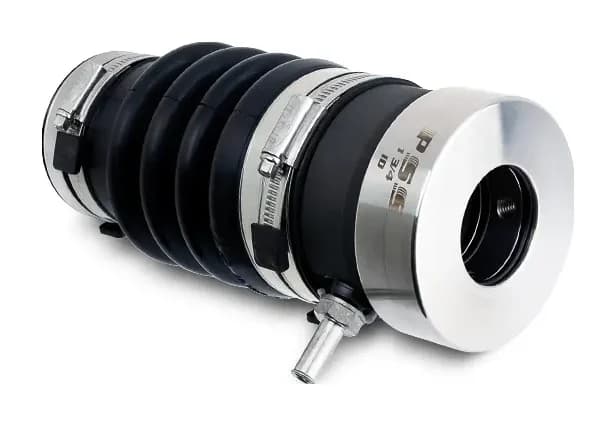
Rubber lip seals (the Volvo-style cartridge type) are the third option: cheap, compact and dripless when new. Their weakness is that the seal rides directly on the spinning shaft — the lip needs a perfectly smooth surface to seal against, wears a groove into the shaft over time, and chars in seconds if it runs dry.
The PSS approach moves the sealing surface off the shaft entirely: the lapped carbon and stainless faces do the sealing, while the rotor's O-rings sit statically on the shaft and rotate with it. That's why a PSS can be fitted over a shaft already scored by old packing or a previous lip seal — and why face seals routinely last several times longer.
- PSS tolerates worn or pitted shafts; lips demand a clean surface
- PSS carbon survives brief dry running; rubber lips don't
- Floating carbon absorbs misalignment that wears lips unevenly
- Lips are cheaper upfront and some allow in-water spare carriers
Comparison FAQs
Is a dripless seal safer than a stuffing box?
Both are safe when maintained, and both can sink a boat when neglected. A stuffing box fails gradually and visibly; a face seal asks for almost nothing day-to-day but is unforgiving of a perished bellow or a blocked water feed. The PSS answer is engineering plus discipline: inspect six-monthly, renew the bellow every six years, and the documented record — PSS quotes 200,000+ Type A units in service — is excellent.
Why not just fit a lip seal? They're cheaper.
Lip seals ride directly on the shaft, so they demand a perfectly smooth surface, wear a groove into it over time, and burn quickly if run dry. A carbon face seal routinely outlasts a lip seal several times over, because the wear surface is the lapped faces — not the shaft or a rubber lip. The PSS seals at its own faces instead — it tolerates the worn shafts, minor misalignment and vibration that defeat lips, and a short dry run won't melt it.
I have a soft-mounted engine that moves around - which seal handles that?
The PSS is well suited to it. The bellow absorbs fore-aft movement, and the carbon is deliberately over-bored so it floats with minor radial movement — a good match for soft mounts and CV/thrust-bearing drivelines. The shaft should still run near-centred through the log; if your setup is extreme, send us the details and we'll confirm fit.
Can I convert from a stuffing box without pulling the shaft?
Usually, yes. The boat must be hauled and the coupling removed, but the shaft normally stays in the boat — the PSS slides on in place of the old gland and clamps to the same stern tube. The whole retrofit is typically a haul-out morning for an experienced fitter. See our installation guide for the full sequence.
Thinking about converting?
Send us your shaft size, stern tube OD and how the boat is used — we'll give you a straight recommendation and a quote, usually from stock.
Luxfords is an authorised PSS dealer holding one of Australia's largest ranges in stock — most shaft and stern tube combinations are on the shelf, so we can usually have you sorted straight away.
(03) 5973 6444