
Vertical or horizontal windlass?
Maxwell builds both — so this isn't a sales pitch for either. The right answer comes from your deck, your locker and your rode. Here's how to decide.
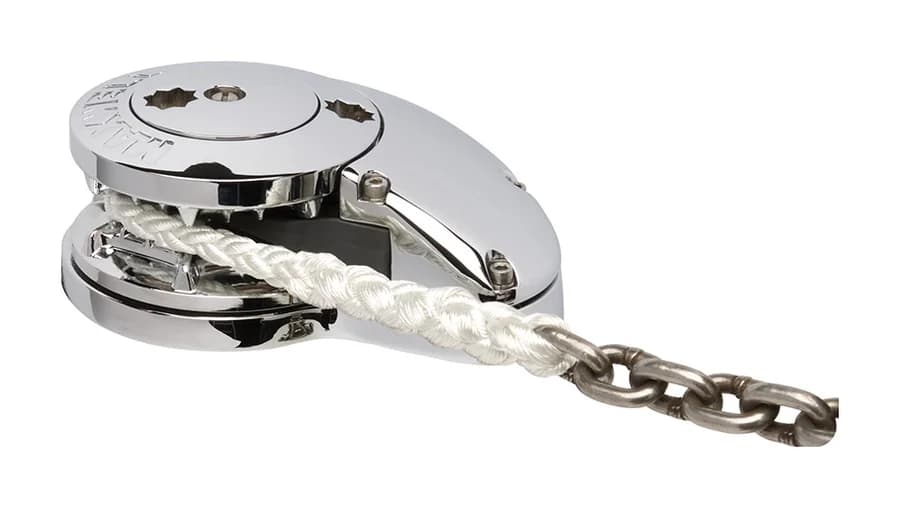
Vertical - the majority choice
- Motor and gearbox below deck — minimal deck clutter, low profile looks
- 180° rode wrap around the chainwheel: maximum grip, minimal jumping
- Line pull from any direction on the capstan drum
- Tolerant of chain alignment (within about ±2%)
- Needs below-deck space and standard deck thickness
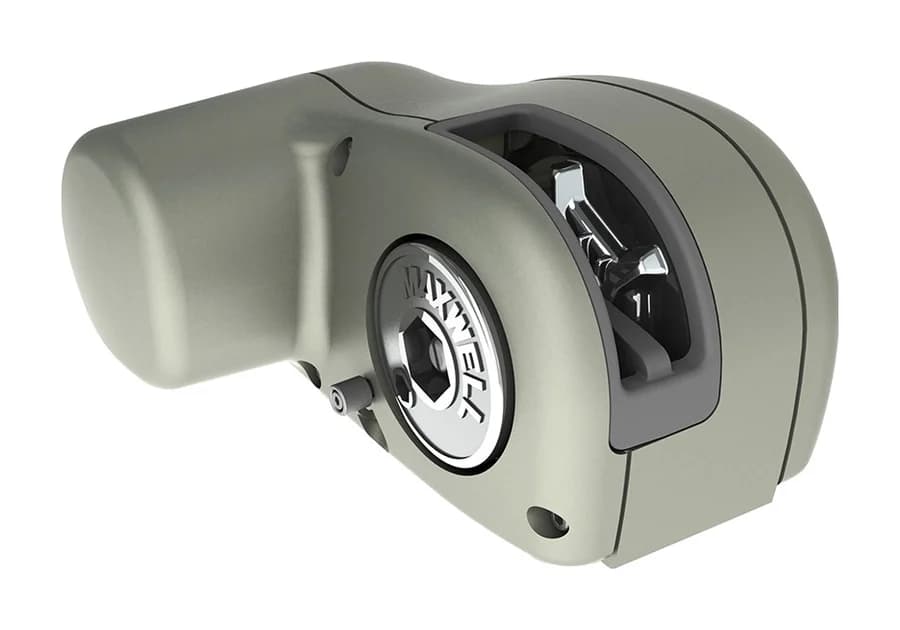
Horizontal - the installation problem-solver
- Everything above deck in a watertight case — no below-deck access needed
- Best for extreme deck thickness (over 200 mm)
- Suits shallow lockers — less fall demanded of the rode
- Can handle two anchors from one winch (twin chainwheel versions)
- Fore-and-aft line pull only; 90° chain wrap
The deciding measurement: rode fall
Before anything else, measure your chain locker. The rode stacks itself by gravity, so Maxwell specifies a minimum fall — the drop from the deckhead to the top of the fully retrieved rode pile:
- 300 mm minimum for chain-only — vertical or horizontal windlasses
- 200 mm minimum for rope/chain automatic windlasses
Tight on both? The BH8 bulkhead windlass mounts inside the locker wall, and the Tasman drum winch eliminates the locker entirely — the whole rode lives on the drum.
Configuration FAQs
What is rode 'fall' and why does it decide so much?
Fall is the vertical drop from the underside of the deck (where the rode enters the locker) to the top of the piled rode once it's all retrieved. Gravity is what stacks the rode — chain needs at least 300 mm of fall to self-stow reliably, rope/chain automatic windlasses at least 200 mm. If your locker can't provide that, a horizontal or bulkhead windlass (or a drum winch with no locker at all) is the better answer.
Which configuration grips the chain better?
Vertical windlasses wrap the rode 180° around the chainwheel, doubling the engagement compared with a horizontal unit's 90° — that's more grip with less chance of jumping. Maxwell's horizontal HRC10 mitigates this with a unique wrap-around chainwheel using more than 90° of the wheel.
Is one configuration faster or more powerful?
No — drive power and chainwheel size set performance, and the two configurations cover broadly overlapping pull ranges in the Maxwell line-up. Choose on installation fit: deck thickness, locker depth and where the motor can live.
What about really thick decks?
Vertical windlasses install through the deck, so extreme deck thickness (over about 200 mm) gets awkward — the motor and gearbox hang below on a spacer. Horizontal windlasses keep everything above deck in one case, making them the natural choice for very thick decks or solid bowsprit platforms.
Not sure? Send us your locker measurements
A photo of your bow and a tape measure across the locker is usually all we need to call the configuration — then we'll size the rest of the system.
Luxfords is an authorised Maxwell distributor — we size the complete system (windlass, anchor, chain, rope, stopper and controls), supply genuine parts and back it with Maxwell's three-year leisure warranty.
(03) 5973 6444