
Heat exchanger maintenance
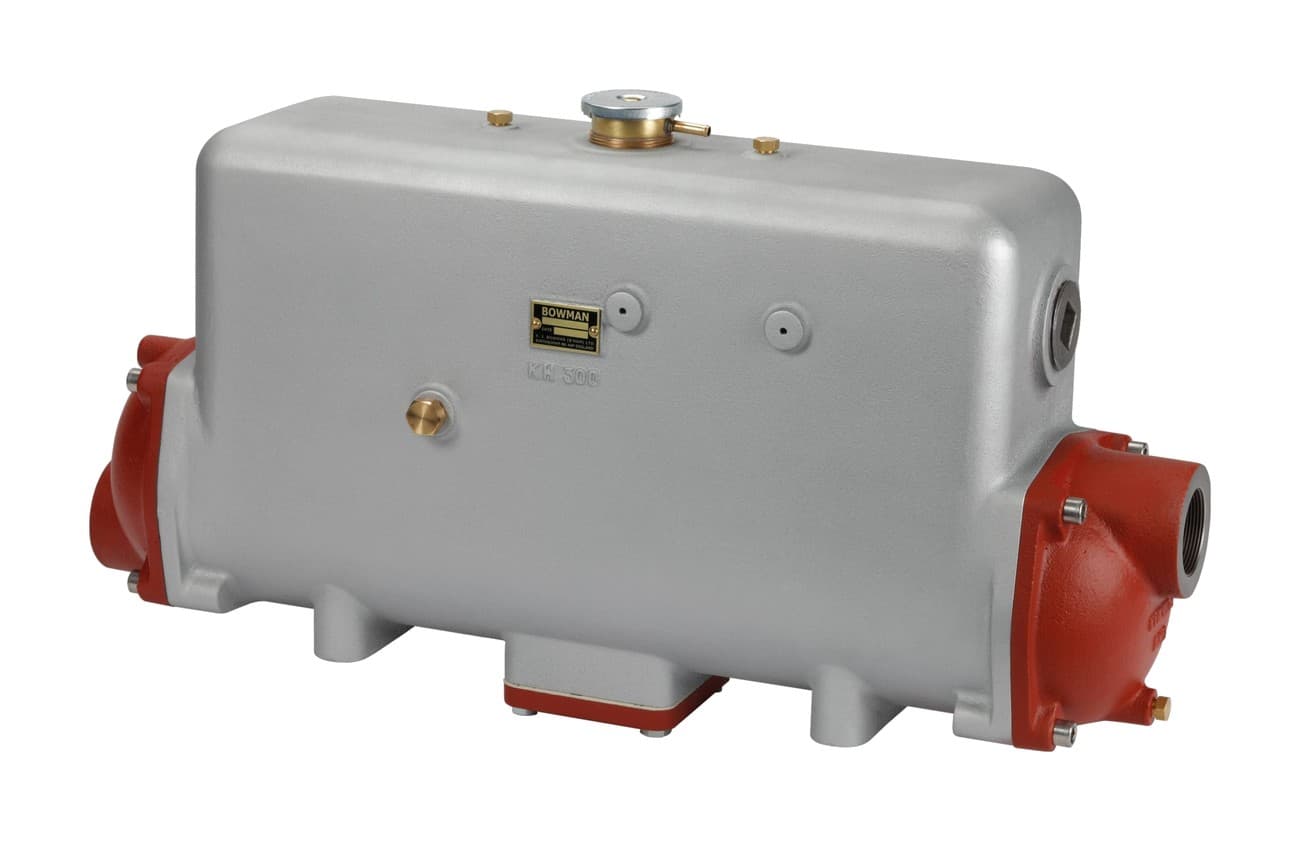
Bowman designed these coolers to be serviced in place — the tube stack withdraws once the end covers are off, and everything that wears is a replaceable part. Here's the routine, the symptoms worth catching early, and what to keep aboard.
The service routine
Open the ends
Close the seacock, drain the raw water side, and remove the end covers. The O-ring sealed covers come off and refit quickly — note their orientation.
Read the evidence
Look into the first rows of tubes before touching anything. Impeller vane pieces, weed, shell grit and scale all tell you what the circuit has been swallowing — and what to fix upstream.
Withdraw & clean the stack
The stack floats in the shell and slides out without disturbing any plumbing. Rod the tubes through, back-flush with fresh water, or descale chemically if there's calcium build-up.
Reassemble with new seals
Refit with new O-rings — Bowman says always fit fresh seals when the end covers come off (and on OEM coolers that carry a pencil anode, renew it once half gone), open the seacock and run the engine up to temperature watching the gauge and the overboard discharge.
Catch it on the gauge, not on the slip
Heat exchangers rarely fail suddenly — they fade. The pattern to watch is rising full-load temperature with normal idle temperature: at low revs the restricted circuit still keeps up, at full flow it can't. That's blockage — strainer, impeller or tube stack — and it's an afternoon's maintenance if caught early, or a cooked engine if ignored.
- Temperature creeps up over the season — fouling or scale building gradually
- Weak overboard discharge — pump or strainer, before the cooler
- Temperature spikes after an impeller failure — vanes are in the stack; pull the covers and retrieve every piece
- Coolant level dropping with no external leak — possible internal tube failure; pressure-test the stack
Don't bin a good shell
Because the stack withdraws, a worn or holed tube stack is a parts replacement, not a new cooler — usually a fraction of the cost. Luxfords stocks spare tube stacks, end covers and O-rings for the popular Bowman sizes, and can identify unmarked units from photos and measurements.
Maintenance FAQs
How often should a heat exchanger be serviced?
Tie it to the rest of the raw water circuit: when the impeller comes out for its annual change, pull the heat exchanger end covers and look. Bowman's guidance is to clean and inspect the stack annually and renew the O-rings at the same time; debris, growth or scale means the stack comes out for a proper clean. Engines in silty rivers, warm northern waters or heavy-hour commercial duty deserve a look more often — the engine's temperature gauge will usually tell you first.
My engine slowly runs hotter at full throttle - is that the cooler?
It's the classic symptom of a partially blocked tube stack or a tired impeller. Creeping full-load temperature with normal idle temperature means the raw water side can no longer move enough water at high flow. Work the circuit in order: strainer, impeller (count the vanes — missing pieces are downstream), then the tube stack. Shed impeller vanes lodging in the first rows of tubes is the most common single finding.
What do I clean the tubes with?
Mechanically: withdraw the stack and rod the tubes through with a suitable soft rod or dowel, then back-flush with fresh water. Chemically: proprietary descalers based on mild acids dissolve calcium scale — follow the product's dilution and time guidance and rinse thoroughly. Avoid aggressive acid mixes on cupronickel, and never use a steel rod that can score the tube bore.
Should my heat exchanger have a pencil anode?
It depends whose cooler it is — and it matters. Bowman's guidance for its cupronickel units is that no zinc anode is needed, and that fitting one can actually harm the protective oxide film the alloy forms. Many engine makers' own OEM coolers do carry pencil anodes, and those should be inspected with the impeller and replaced once about half wasted. If you're not sure what your unit wants, send us a photo — we'll tell you.
Need a stack, seals or anodes?
Tell us the model — or send photos and measurements of an unmarked unit — and we'll quote the parts or the replacement, with spares advice included.
Selection verified against Bowman's data before anything ships — and spares advice included with every quote.
(03) 5973 6444