
How marine heat exchangers work
Your engine never touches the sea. It runs a sealed coolant circuit at its proper temperature, and one compact shell-and-tube unit hands that heat to the raw water on its way overboard. Here's the whole system, end to end.
Two circuits, one wall of tubes
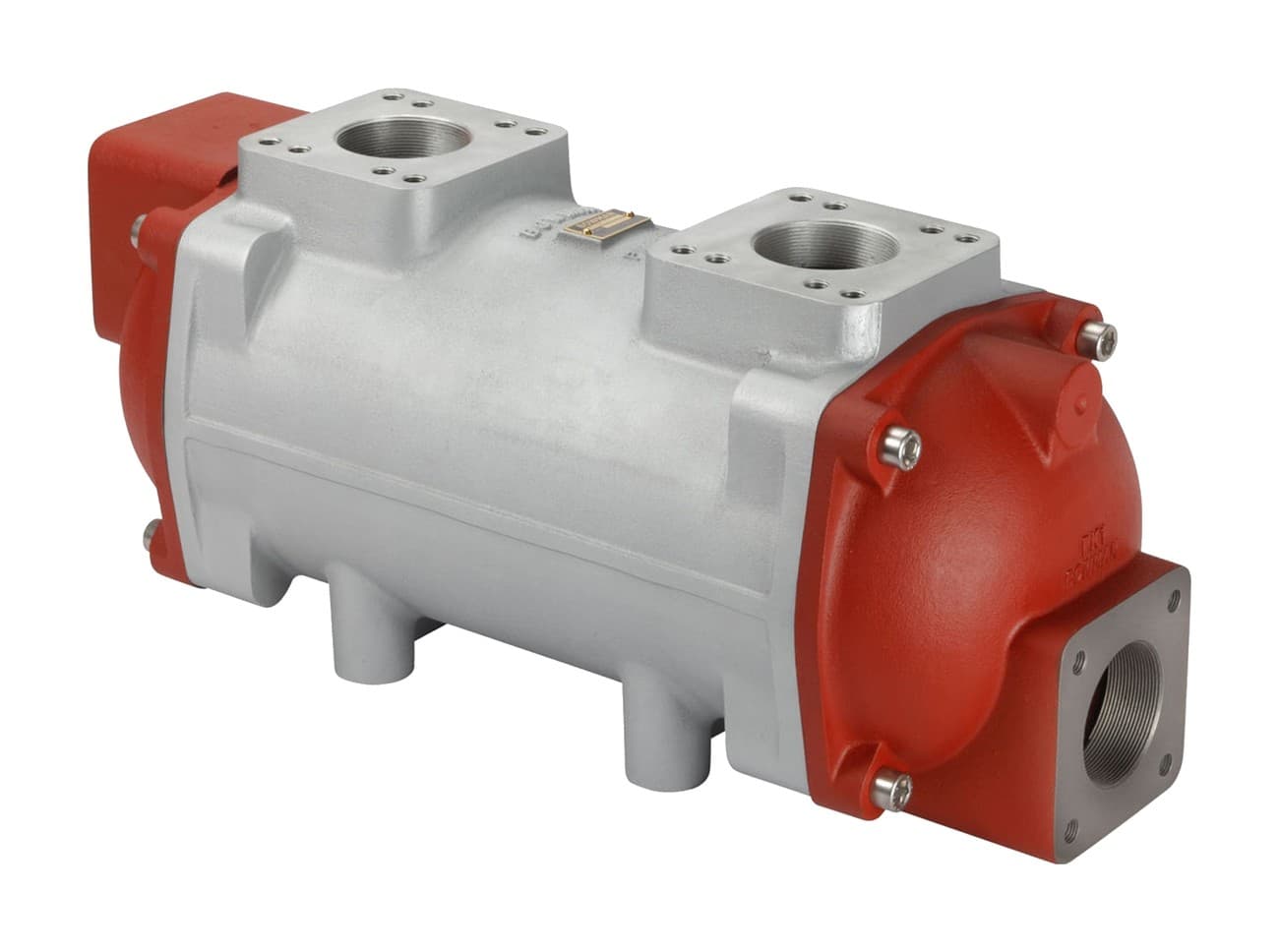
A shell-and-tube heat exchanger is a bundle of small-bore tubes inside a cylindrical shell. Raw water — drawn through a seacock and strainer by the engine's impeller pump — flows through the tubes. The hot circuit (engine coolant, gearbox oil, hydraulic oil or charge air, depending on the unit) flows around the outside of the tubes inside the shell. Heat crosses the tube walls; the two fluids never mix.
The engine side works exactly like a car's cooling system — a sealed circuit of coolant with inhibitors, a thermostat and a header tank — except the "radiator" is this tube stack, with the sea standing in for the airflow. That's why the engine can run at its designed temperature with no salt, silt or marine growth ever entering the block.
Bowman's stacks float inside the body rather than being fixed at both ends, so they expand and contract freely with temperature — and once the end covers come off, the whole stack withdraws for cleaning or replacement without disturbing a single hose.
Follow the raw water
The raw water side is one continuous path — and every stop on it is a service point worth knowing.
Seacock & strainer
Water enters through the hull fitting and a clear-bowl strainer that catches weed and debris before it reaches the pump. A blocked strainer is the most common cause of overheating.
Impeller pump
A flexible rubber impeller driven off the engine pushes the water through the circuit. Impellers are consumables — shed vanes travel downstream and lodge in the cooler tubes.
Oil coolers
On many installations the raw water passes through the gearbox or engine oil cooler first, while it's coldest — oil runs hotter than coolant and benefits most.
The heat exchanger
Through the tube stack, collecting the engine's heat from the coolant flowing around the tubes. This is where the temperature gauge is won or lost.
Into the exhaust
The warmed water is injected into the exhaust elbow, cooling the gas and silencing the engine — the wet exhaust and the cooling system are one circuit.
Overboard
Gas and water exit together at the transom. A healthy stream at the exhaust outlet is the quickest daily check that the whole raw water side is working.
Materials decide lifespan
Sea water is mildly corrosive and full of life, so the tube stack material matters more than any other specification. Bowman's standard marine stacks are cupronickel — copper-nickel alloy with decades of proven sea water service and natural resistance to fouling. For warm, brackish or aggressive waters, titaniumstacks are available and carry Bowman's 10-year stack guarantee. Land-based versions of the same frames swap to cast iron end covers for fresh, bore or mine water at the same thermal rating.
One nuance worth knowing: Bowman's guidance for its cupronickel units is that no zinc anode is needed — the alloy protects itself with an oxide film, and fitting an anode can disturb it. Many engine makers' OEM coolers do carry pencil anodes, though, and those want checking whenever the impeller comes out.
How-it-works FAQs
Why not just pump sea water straight through the engine?
Early marine engines did exactly that, and it shortened their lives: salt water corrodes iron and aluminium water jackets, and the dissolved salts bake onto hot surfaces as scale, so direct raw-water-cooled engines must run deliberately cold thermostats to limit scaling — hurting efficiency and increasing wear. A heat exchanger lets the engine run a sealed coolant circuit at its proper design temperature, with corrosion inhibitors, while the raw water stays inside one serviceable, corrosion-resistant component.
What's the difference between a heat exchanger and a keel cooler?
Both keep raw water out of the engine. A keel cooler runs the engine's coolant through pipes or channels outside the hull, using the passing water as the heat sink — no raw water pump or strainer, popular on workboats that take ground. A heat exchanger brings raw water inboard through a tube stack instead, which keeps everything inside the boat, serviceable at sea, and is the standard arrangement on recreational and most commercial vessels.
Where does the heat actually go?
Overboard, with the raw water. On most marine installations the warmed raw water leaving the heat exchanger is injected into the exhaust, where it also cools the exhaust gas and silences the engine — which is why the raw water circuit and the wet exhaust are really one system, and why a blocked strainer shows up as both high engine temperature and a dry, noisy exhaust.
Why do tube stacks fail, and can they be replaced separately?
The common killers are erosion from silt and sand, blockage by impeller debris and growth, galvanic attack, and old age. On Bowman units the stack floats inside the shell and withdraws once the end covers are off, so a worn stack can be replaced without touching the plumbing — usually far cheaper than a whole new cooler. Luxfords stocks spare stacks, end covers and O-rings for the popular sizes.
Sizing a cooler? Start with the selector.
Tell us what needs cooling and your engine's power — the selector matches Bowman's published ratings, and we confirm the details when you enquire.
Selection verified against Bowman's data before anything ships — and spares advice included with every quote.
(03) 5973 6444