
Damper drive plates
The part nobody sees until the gearbox comes off — and the reason a healthy diesel can sound like a bag of spanners at idle. What it does, how it fails, and how we identify yours.
Between fire and gear
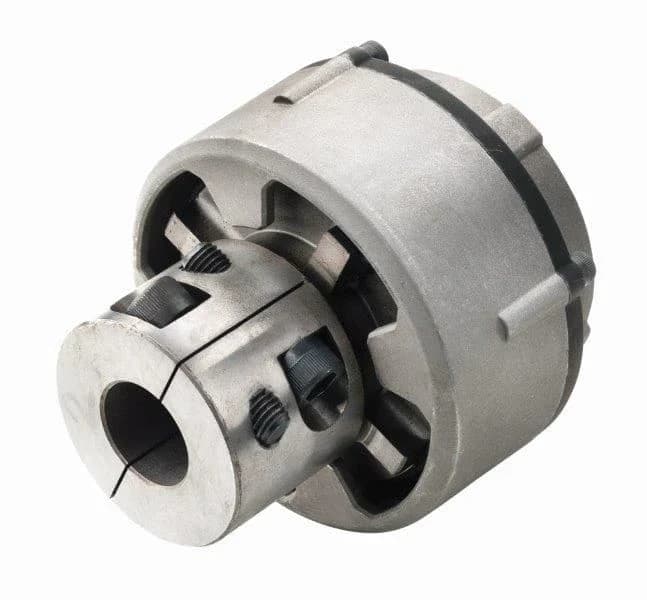
A diesel doesn't make smooth torque — it makes a pulse per firing stroke. Heavy old flywheels averaged those pulses out; modern engines run light flywheels, so the pulses arrive at the gearbox intact. The damper plate is the buffer: a splined hub driving through steel spring packs or rubber/nylon elements inside a steel plate bolted to the flywheel.
Plates are graded by how far they can twist: light-deflection loop types for leisure craft, mid-deflection hammer-head types for working boats, and high-deflection plates (R&D quotes up to about 30 degrees) for trawlers and tugs where the driveline sees real shock. Matching deflection class to the boat's duty is most of the selection.
How a dying plate announces itself
The symptoms are mechanical and specific — and they get cheaper the earlier you act.
Metallic rattle at idle
Loudest in neutral, gone as revs rise and the springs load up — the textbook symptom of worn damper springs.
Clunk into gear
A harsh clank when shifting, or rough delayed engagement — the plate has free play it shouldn't have.
Low-speed vibration
New vibration at trolling speeds while everything else (mounts, alignment, prop) checks out.
Debris in the bellhousing
Broken spring pieces found during a gearbox job — replace the plate, don't reassemble on hope.
Identifying a replacement
Plates suit specific engine/gearbox pairings — PRM, ZF, Hurth and Technodrive boxes all have their patterns. To match yours we need:
- Spline count on the centre hub
- Gearbox input shaft diameter
- Backing plate diameter
- Number of flywheel bolts and their PCD (pitch circle diameter)
Or skip the measuring: clear photos of both faces with a tape across the plate usually get us there. We supply plates to suit most common gearboxes, drawing on R&D Marine and Australian-made Poly Flex options.
Damper plate FAQs
What exactly does a damper plate do?
It sits between the engine's flywheel and the gearbox input shaft and absorbs torsional vibration — the twist-pulse every diesel firing stroke sends down the driveline. Springs or elastomer elements in the plate soak up the pulses, protecting gearbox teeth, smoothing gear engagement and killing the idle rattle that light modern flywheels otherwise produce.
Is the rattle actually harmful, or just annoying?
Both. The rattle is the gearbox input gear chattering against its neighbours between firing pulses — metal hitting metal at every pulse. Left long enough it wears the gearbox, and a damper plate that's worn through its springs can shed them into the bellhousing, where broken springs have been known to jam an engine. A rattle that appears at idle and disappears with revs is the classic early warning.
What information identifies a replacement plate?
Four things: the number of splines on the centre hub, the diameter of the gearbox input shaft, and on the flywheel side the bolt count and PCD (pitch circle diameter) of the backing plate, plus its overall diameter. With those — or clear photos with a tape across the plate — we can match a replacement for most engine/gearbox combinations.
How long do damper plates last?
R&D Marine, whose plates we can supply, quotes a typical service life of 5–10 years depending on the vessel and hours — but duty matters more than the calendar: lots of idling, gear-shifting and trolling works the springs hardest. Any inspection that has the gearbox off the engine is the moment to fit a new plate; the part is cheap relative to the labour of getting at it.
Gearbox rattling? Get the plate ready.
Send the engine and gearbox models — or the four measurements, or photos — and we'll identify the plate so it's waiting when the gearbox comes off.