
Choosing the shell: phenolic, brass, GRP or rubber
The rubber inside is the same — the shell is the decision. One galvanic rule does most of the deciding, and the rest is about your housing's material and condition.
The golden rule: no brass in steel or aluminium
A brass-shelled bearing in a steel or aluminium stern tube or strut creates a galvanic couple in seawater — the housing corrodes around the bearing, and the shell itself can dezincify to pink, crumbly weakness. Composite shells (phenolic or GRP) are electrically inert and remove the problem completely. If your boat is steel or alloy, the material decision is already made.
The four shells, in detail
Phenolic
80 sizes availableFabric-reinforced phenolic resin shell, nitrile rubber lining
Paper/fabric-wound resin laminate shells can never dezincify or set up a galvanic cell with the strut or stern tube, which is why phenolic is the most common replacement choice. Exalto machines them with extra bore clearance to allow for water swell.
Best for: The everyday default — immune to galvanic corrosion, suits bronze, steel and GRP housings alike
The resin absorbs a little water and swells, so phenolic bearings are machined to slightly larger bore tolerances — the published dry fit tightens once wet
Brass
49 sizes availableNaval brass shell, nitrile rubber lining
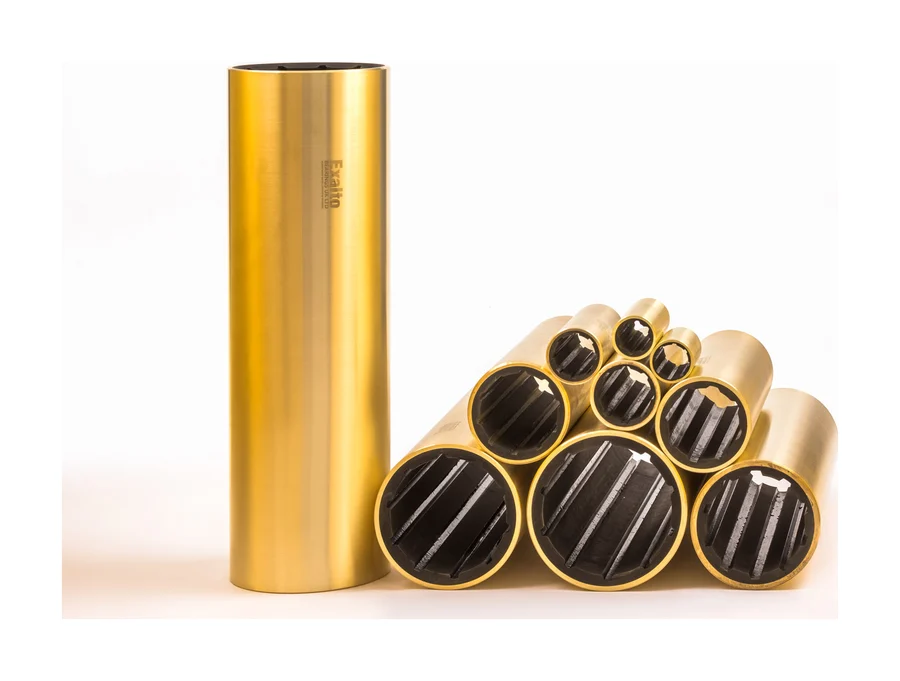
The classic cutlass construction. Naval brass resists dezincification better than common brass, machines accurately, and holds its press fit for years — but it must live in a compatible metal (bronze) or composite housing.
Best for: Structurally the strongest shell — the choice for worn or slightly oversize housings and traditional bronze fittings
Never fit a brass-shelled bearing into a steel or aluminium stern tube or strut — the dissimilar metals create galvanic corrosion. Use phenolic or GRP instead
GRP
75 sizes availableGlass-reinforced polyester shell, nitrile rubber lining
Minimal water absorption, zero galvanic interaction, and stiffer than phenolic. Luxfords, Exalto's Australian distributor, specialises in GRP-shelled bearings.
Best for: The best alternative to brass for steel and aluminium stern tubes — and ideal for bonding into fibreglass tubes
Like all composite shells, treat with care during pressing — support evenly and never hammer
All-rubber flanged
9 sizes availableMoulded nitrile rubber with integral mounting flange — no hard shell
Supplied with non-metallic screws. The moulded body grips the housing directly, so the OD is “as moulded” rather than machined to an interference tolerance.
Best for: Production yachts (Jeanneau, Beneteau and similar) whose sterngear is designed around a flanged rubber bearing
Held by screws through the flange rather than a press fit — match the original pattern exactly
Thirty-second decision guide
Steel or aluminium stern tube / strut?
GRP (or phenolic). Never brass.
Bonding into a fibreglass stern tube?
GRP — it bonds beautifully and won't absorb water.
Bronze strut or housing, standard bore?
Phenolic is the everyday answer; brass if you prefer the traditional shell.
Housing slightly worn or oversize?
Brass — strongest shell, and specials can be machined to your exact bore.
Production yacht with a flanged rubber bearing?
All-rubber flanged, matching the original pattern.
Luxfords is Exalto's Australian distributor — with a particular speciality in GRP-shelled bearings, the modern answer for steel and alloy boats.
Materials FAQs
Does the shell material change how the bearing performs?
Not in normal running — every shell carries the same fluted nitrile rubber doing the same water-lubricated job. The shell choice is about the housing it lives in: galvanic compatibility, structural fit, and how it's retained. Pick the shell for the boat, not for performance.
Why can't I put a brass bearing in my aluminium stern drive or steel tube?
Brass and aluminium (or steel) are far apart on the galvanic scale; immersed in seawater and electrically connected, the less noble metal corrodes — your housing sacrifices itself around the bearing, and the brass shell can dezincify too. Composite shells (phenolic or GRP) are electrically dead, which removes the problem entirely. This isn't a preference — it's the rule.
My old bearing was brass - should I replace like-for-like?
If the housing is bronze or another brass-compatible material, yes — brass is the strongest shell and presses beautifully. If you discover the old brass bearing was living in a steel or aluminium housing, treat the replacement as the chance to fix the mistake with phenolic or GRP. Same dimensions, same rubber, no galvanic cell.
What's special about the all-rubber flanged bearings?
Several production builders — Jeanneau and Beneteau among them — designed their sterngear around a moulded rubber bearing with an integral mounting flange instead of a pressed-in shell. The flange bolts to the housing with screws (supplied non-metallic), and the moulded body grips the bore directly. If your boat has one, replace with the matching flanged pattern — a shelled bearing isn't a substitute.
Not sure which shell suits your boat?
Tell us the housing material and your three measurements — we'll recommend the right shell and confirm the exact Exalto part.
Three measurements identify any cutlass bearing: shaft diameter, outside diameter and length. Send what you have — even a photo of the old bearing — and we'll confirm the right Exalto part.
(03) 5973 6444