
Hydraulic oil cooling
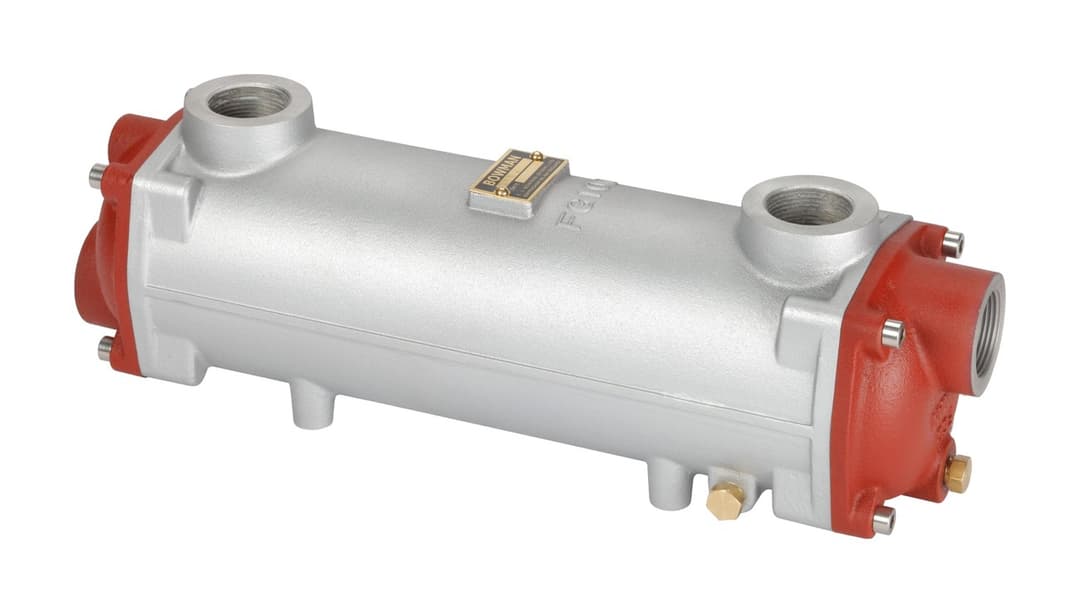
Winches, cranes, steering packs, augers, drill rigs — every hydraulic system turns part of its drive power into heat, and the oil has to shed it somewhere. Bowman water-cooled shell-and-tube coolers handle 4 to 900 kW of heat in a fraction of the size of an air-blast cooler.
Sizing: start from installed power
Hydraulic systems are honest about their inefficiency — the power that doesn't come out as work comes out as heat in the oil. Without measured figures, the working rule is that 25–30% of the installed pump drive power becomes heat. A 75 kW power pack therefore needs roughly 19–23 kW of cooling; we size on the upper bound so the system holds temperature through hot Australian summers, long duty cycles and component wear.
If you know more, we can do better: continuous versus intermittent duty, relief-valve time, reservoir size and target oil temperature all sharpen the selection. Send what you have with the enquiry — worst case we size conservatively from the installed power.
The same shell-and-tube units cool gearbox oil on the engine & transmission cooler page, rated by engine power instead of heat load.
The Bowman hydraulic ladder - heat dissipated (ISO VG 37 oil, 50 °C oil outlet, 25 °C water inlet)
| Model | Cooling capacity |
|---|---|
| EC80 | up to 4 kW heat |
| EC100 | up to 9 kW heat |
| EC120 | up to 13 kW heat |
| EC140 | up to 17 kW heat |
| FC100 | up to 19 kW heat |
| EC160 | up to 22 kW heat |
| FC120 | up to 26 kW heat |
| FC140 | up to 35 kW heat |
| FG100 | up to 37 kW heat |
| FC160 | up to 45 kW heat |
| FG120 | up to 50 kW heat |
| GL140 | up to 56 kW heat |
| FG140 | up to 62 kW heat |
| GL180 | up to 73 kW heat |
| FG160 | up to 79 kW heat |
| GL240 | up to 93 kW heat |
| GK190 | up to 112 kW heat |
| GL320 | up to 114 kW heat |
| FG200 | up to 123 kW heat |
| GK250 | up to 144 kW heat |
| GL400 | up to 146 kW heat |
| GL480 | up to 172 kW heat |
| GK320 | up to 181 kW heat |
| JK250 | up to 186 kW heat |
| GK400 | up to 221 kW heat |
| GK480 | up to 259 kW heat |
| JK400 | up to 283 kW heat |
| GK600 | up to 329 kW heat |
| PK320 | up to 336 kW heat |
| JK600 | up to 401 kW heat |
| RK400 | up to 570 kW heat |
| PK600 | up to 660 kW heat |
| RK600 | up to 900 kW heat |
Where they earn their keep
The same compact coolers serve marine decks and dirty industrial sites — the difference is only the water-side materials.
Marine deck machinery
Anchor winches, net drums, cranes and davits, bow thruster power packs and hydraulic steering on commercial vessels — cooled by the sea water already on board.
Mobile & fixed plant
Drill rigs, augers, crushers and conveyors where an air-blast cooler would clog with dust — a sealed water circuit shrugs that off.
Mining & quarrying
Mine water is often mineral-rich and aggressive — titanium stacks and Bowman's stainless range are specified exactly for it.
Power packs & presses
Factory hydraulic power units running long shifts at steady load, where holding oil temperature decides seal and pump life.
Standby & emergency plant
Cooling that must simply work on the day — simple, passive, no fans or electronics in the way.
Gensets & auxiliaries
Auxiliary hydraulic circuits on generator sets and harbour plant, sharing the set's cooling water supply.
Hydraulic cooling FAQs
How much cooling does my hydraulic system need?
If you don't have a measured heat load, the working rule is that 25–30% of the installed pump drive power ends up as heat in the oil — a 40 kW power pack typically needs 10–12 kW of cooling. Luxfords sizes on the upper bound so the cooler keeps up on hot days and worn components. If you have the actual figures (flow, pressure drop, duty cycle), send them with your enquiry and we'll size it properly.
Why does hydraulic oil temperature matter so much?
Hot oil thins out, so clearances leak, pumps slip and the system gets less efficient — which makes more heat. Sustained high temperatures also oxidise the oil and harden seals, shortening the life of every component in the circuit. Keeping the reservoir in its designed operating band is the cheapest reliability upgrade a hydraulic system can get.
Water-cooled or air-blast cooler - which should I use?
Air-blast coolers need airflow and space, struggle on hot days, and add fan noise and dust loading. A water-cooled shell-and-tube cooler is far more compact for the same duty, performs the same on a 40-degree day as a cool one, and suits marine and fixed industrial installs where water is available. Where there's no cooling water at all, air-blast is the fallback — we can advise on either.
Can these coolers handle dirty or mineral-rich water?
Yes — that's a Bowman speciality. The land-based versions run the same thermal ratings with cast iron end covers, and for mine water or other aggressive sources a titanium tube stack is the right call. Bowman's stainless steel range also suits chemically aggressive fluids. Tell us what's in the water and we'll match the materials.
Tell us the installed power - we'll do the rest.
Pump drive kW, duty cycle if you know it, and what the cooling water is. We'll match the Bowman model, the right materials, and quote it with spares advice.
Selection verified against Bowman's data before anything ships — and spares advice included with every quote.
(03) 5973 6444Get a cooling quote
Photos of the unit, its end caps and connections with a tape in frame - even unmarked units can usually be identified. Sends to sales@luxfords.com.au.